



Planting for the Next Generation
Silvopasture Sustains Farms and Families
Narration by Kristina Villa
A Timeless Vision
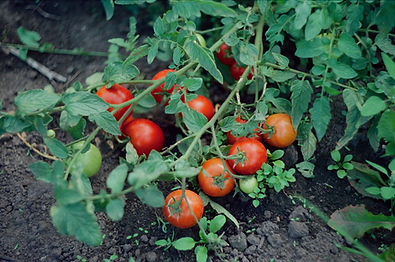
The farm products on our kitchen counters, in our fridges, freezers, and pantries are all markers of the passing season. Each crop and animal is a result of seasonal shifts, careful planning, and endless hours of maintenance and care. They find their way to us through the diligent craft of farmers on pieces of land they have spent years coming to know and through marketing outlets created and sustained by community support. The heirloom tomato that rests in pure beauty on our cutting board is a small fraction of the system that created it. The grass-fed beef in our freezer a mere physical fragment of the acres of managed pasture land that brought it to fruition.
Farm systems, even annual ones, are perennial by nature. To secure harvest in a growing season requires effort the season before. Each successive year on a piece of land provides the opportunity to build more infrastructure and fine-tune operations. The more years spent on a piece of land, the more invaluable these systems become. It may take several growing seasons of trial and error before a microclimate, crop rotation, pest or disease, soil type, or land formation is totally understood and sorted out. A commitment to the landscape in this way is a maddening mix of science, labor, perseverance, and hope.
Farms that focus on or incorporate livestock are often looking beyond one generation into the next through breeding and the careful management of the well-being and productivity of the land. The health of the herd or flock is directly tied to the health of the landscape and this delicate balance of fully using the land while also allowing it to recover is a dance that unfolds season after season. The modern costs of feeding and sheltering livestock are steep and to support the lifecycle of these living beings requires both. Farmers today who are looking to avoid the hog or chicken house or want their dairy cows to have access to fresh seasonal forage without stress are turning to an ancient, newly revived, ecologically sound management technique. Silvopasture is not just a perennial system rooted in plants and livestock, but also in practice and inheritance.
The heirloom tomato that rests in pure beauty on our cutting board is a small fraction of the system that created it.
What Is Silvopasture?
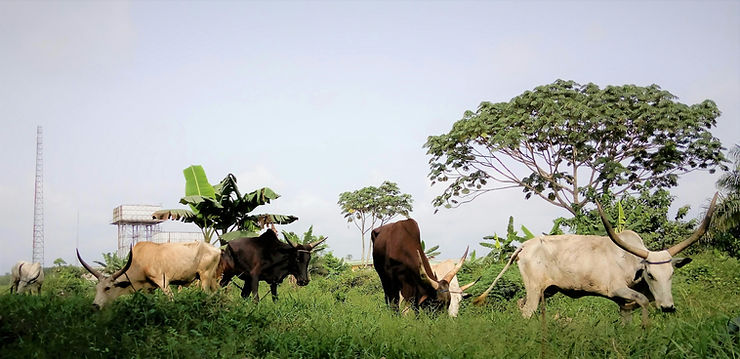
Silvopasture systems are a “net positive” for farmers according to Austin Unruh, founder of Trees for Graziers, an agroforestry installation operation working in Lancaster County, Pennsylvania. While agroforestry includes all practices that incorporate trees into farming systems for production and/or conservation, silvopasture is specifically focused on using trees for shade and forage within a pastured livestock system. “We are planting trees into pastures that provide shade for livestock. That is the simplest service that the trees are providing. Planting the trees is good for the farms and for the animals. It helps to eliminate heat stress in the pasture. It becomes more dynamic when you can plant trees that offer even more services than shade. You can plant trees that provide shade plus feed. This helps farmers reduce their costs and makes the operation more sustainable. There’s a lot of ecological value on the farm in addition to the economic value for the farmers.”
Having completed over 50 projects in the region, Trees for Graziers has seen the practice of silvopasture make an impact on many pieces of land, tailored in ways that are specific to each farmer’s practices and each farm’s ecotype. Austin, along with his eight-member team, provides everything from consultations to developing a unique farm plan, to finding funding to help cover the costs of the installations, to the actual installations and maintenance of the trees themselves. They also have a nursery where they grow most of the material they need for their projects. Austin notes, “We have found that one of the biggest barriers for people who are interested in creating a silvopasture system is that it is difficult to accomplish on your own. It is a big job to take on, and it is something that most people have no experience with. It is our goal to provide a full suite of services so that we can be a one-stop shop for folks interested in making it happen.
A commitment to the landscape in this way is a maddening mix of science, labor, perseverance, and hope.
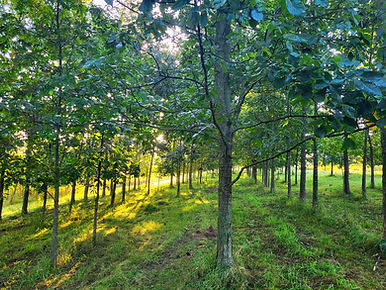
Managing their nursery allows them to cultivate the species needed for their installations, even down to the specific genetics they know will be successful. Working with fruiting, mast, and shade trees, the team formulates a selection of species based on the goals of the farmer and the layout of the land. Austin explains, “Honey locusts, mulberries, and persimmons are three of our key species. These trees provide shade plus additional benefits that are particularly valuable for grazing operations. Honey locusts have the highest upside for a ruminant grazing operation because they provide pods that drop during early winter when seed is particularly scarce in the pasture. Mulberries and persimmons are great for ruminant operations as well as for pigs and poultry. There are many other species that mast like oak trees and chestnuts, among others, dropping nuts in the fall. We work with fast-growing shade trees like willows, poplars, black locusts, and sycamores. These species are fast and are also cheap and can generally provide useful shade in as little as three years.”
Ecology in Service of Economy
Austin came into tree planting by way of riparian buffer installations to help with erosion and runoff. Generally, these types of conservation projects are in great need and easily funded, especially in Lancaster County where the density of agriculture contributes to pollution making its way into the Chesapeake Bay. From there, Austin recognized a need for similar practices on the farm that not only provide the ecological services of preventing runoff, but that also contribute to the economic bottom line of the operation. Switching full time to silvopasture installations has allowed Trees for Graziers to contribute ecological benefits to the farm and greater environment while also making the farm more resilient to heat stress, drought, and flooding. Austin notes, “Ecologically, there are so many benefits to having pastured land over just row crops of corn and soybeans. This is in terms of water-holding capacity, wildlife habitat, biodiversity, and so much more.”
Healthier ecosystems lead to healthier stock, and healthy animals equate to heavier hang weights. Supplemental feed reduces feed costs while also bringing in diverse, whole-food nutrition. The trees themselves are storing carbon in their tissues and in the soil, and help the farm soak in groundwater, allowing the waste materials of the operation to stay right where they are. On the farm is where waste can provide the most benefits over the potential harm that comes from it traveling downstream.
The health of the herd or flock is directly tied to the health of the landscape and this delicate balance of fully using the land while also allowing it to recover is a dance that unfolds season after season.
Humane and Viable
Austin reports that 80 percent of his clients are from the Amish or Mennonite communities. This makes sense not only because they make up the bulk of agricultural enterprises in Lancaster County, but also because while socially conservative, some in the community are open to being agriculturally progressive in their practices. This is because their operations tend to be small farms, and the need to use their land while maintaining long-term productivity lends itself toward more regenerative practices. Working with communities whose cultures prioritize multigenerational land use has been a rewarding experience for Austin and his team. The perennial nature of his work fits seamlessly into farm models who are already thinking about the long-term productivity of their land. Often, these families are seeking pathways for their children to derive an income from the land, and silvopasture can support these visions.
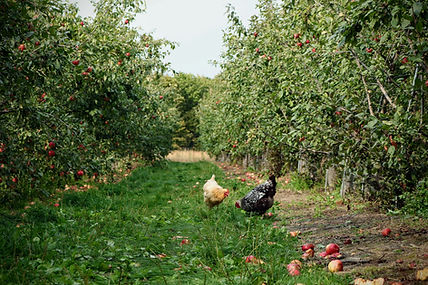
Austin elaborates, “One of the main ways that someone can diversify their operations today is to put up a hog barn or chicken barn, squeezing more animals into smaller spaces. The truth is nobody loves that. People do it to make the farm life work economical, but there’s a real sacrifice there. There’s a sacrifice in the quality of life of the farmer and the animals. If you can do your day-in and day-out work on a farm that is brimming with life and is almost parklike in its beauty, that’s a special thing. That’s the kind of thing that leads to the next generation wanting to take over the farm.”
By implementing something that works with nature, the dynamics of the system are destined to integrate and improve as the years unfold, so long as dedicated stewards remain on the land to thin the trees, prune the branches, and clear out fallen limbs.
Barriers and Breakthroughs
Silvopasture, once established, is an elegant and simple system that requires little maintenance or long-term monetary investment. Most of the challenges lie at the start of the project when materials, labor, and funding can lead to limitations and bottlenecks. One of the big barriers to completing a project for the Trees for Graziers team is keeping their nursery stock flush with their high-demand species. Another barrier the team faces is the seasonal nature of tree planting and fitting their tree installations into a short, two-month window. The biggest barrier by far is sourcing funding to help their clients offset the costs of the installations. After spending time in the conservation realms of tree planting, Austin recognized that he could access funding for projects that offer ecologic improvements to the land.

Most small farms aren’t working with a lot of excess capital given the typically low margins of agricultural endeavors. For this reason, Austin has added sourcing funding to his offerings to help his clients bring their vision to reality. Austin explains, “We wouldn’t be able to do many of these projects if we weren’t able to find grants to reduce the costs. It isn’t the most fun or rewarding part of the work, but it is essential. Consistent access to funding is one of our biggest challenges, whether it is local, federal, or nonprofit funding. It is especially challenging right now with federal funds going back and forth over the last six months. It is critical that we can access that funding to help farmers cover the costs.” Austin believes that in the future farmers may be willing to take out loans or pay out of pocket, but silvopasture is a novel methodology in the current agricultural space, and he feels that farmers will need to see these systems in action to develop the confidence they would need to fully commit to the investment. Additionally, silvopasture is a slow-money system, not generating payoff or profit in the short term, and there are currently few loan capital options that align with the timeframe, risks, and reward profiles of the practice.
“That exemplifies nicely what agroforestry projects can do. By stacking functions on one operation, you can build something that allows the next generation to come in and do something productive and valuable on the farm.
Planting for the Next Generation
Being an agroforestry buff and a published author about the work, Austin is guided by the inherent value he perceives of these perennial systems. He is drawn to thinking about the farm from the long view and he sees the benefits that can be provided not just to the land, but also the people. When discussing the trials endured by farmers looking to transition their land to new farmers or successive generations, Austin was inspired to tell a story shared by one of his clients who is a Mennonite farmer. When the farmer was growing up, his father was able to acquire farms for him and his siblings. That gift allowed the farmer to start a business that derived an income from the land. In the modern day, land costs outprice the income that can be generated from the land itself and the farmer recognizes that he is unable to do the same for his own children today. Forced to evolve with the times, he began planting apple and chestnut trees and diversifying the features of the farm to enable the property to generate multiple income streams.
In this way, although he is unable to buy land for his children, he can create new opportunities that have the potential to sustain future generations. Austin reflects, “That exemplifies nicely what agroforestry projects can do. By stacking functions on one operation, you can build something that allows the next generation to come in and do something productive and valuable on the farm. It allows the next generation to generate an income which allows for that essential transition to happen much easier than if there was only one income opportunity. If you want your farm to be a place that someone wants to take over in the future, this perennial investment can make a big difference for that next generation.”

The Long View
The beauty of perennial systems like silvopasture is the focus on the long view. Austin and his team are doing work that will outlive the farmers that have hired him and will create economic, ecological, and social benefits that grow as the years go by. By implementing something that works with nature, the dynamics of the system are destined to integrate and improve as the years unfold, so long as dedicated stewards remain on the land to thin the trees, prune the branches, and clear out fallen limbs. Austin notes, “Silvopasture is a profitable practice when done well, but it is not something that happens quickly. It’s not a get-rich-quick scheme. It’s not a strategy that is going to work in the short term. In the long term, if you have a culture that supports multigenerational thinking and strategy, you can make improvements on the farm that will make the farm more profitable and resilient for generations to come.”
Here at The Farmers Land Trust, we support the long view and all strategy and thinking that recognize the urgency of preserving regeneratively run agricultural enterprises. We acknowledge the wisdom kept in farms that have embraced natural systems as an aspect of their management, and we are dedicated to keeping these operations in a state of productivity for the benefit of the local community and ecology. If you have a farm or know of a farmer in need of farmland transition support, please reach out to us today at [email protected] or by calling us at (833) 432-7658. If you are interested in implementing a silvopasture system on your farm or would like to learn more about its potential, visit the Trees for Graziers website to view upcoming events and classes and explore the full suite of their agroforestry services.
