Alita Kelly’s Journey to Leasing Land in the Farmland Commons
Narrated by Aleeyah Frye
Written by Darby Weaver
A Seed Sprouts in Darkness
Something transformational is happening in southwestern Michigan at the Earthen Heart Farmland Commons; the Bangor Farm project is receiving stewardship and guidance from a new visionary leader. Alita Kelly, a Black woman farmer and founder of Jade Rabbit, and board chair of the West Michigan Young Farmers Chapter, has officially signed a 99-year lease, securing tenure of the 19.9-acre farm without the burden of debt. The opportunity provides Alita with the foundation and support that will allow her to continue her enduring missions of social equity, environmental activism, and food sovereignty.
Alita’s efforts to support the well-being of people and our planet have been impactful in Michigan and beyond. Alita explains, “I got started in the food realm after I had my daughter. I grew up experiencing food insecurity and I didn’t have the best diet as a child. I wasn’t exposed to a lot of fruits and vegetables at home. My grandparents exposed me to more and I am really grateful that they were able to do that for me. Food justice, food sovereignty, and even healthy eating wasn’t really on my radar. This was the case until I had a very traumatic birth experience.”
At 20 years old, Alita became pregnant with her daughter. Though her experiences with food and wellness were limited, Alita had an innate sense that she wanted to do whatever she could to support the health of her growing baby. She developed preeclampsia, a condition that causes high blood pressure during pregnancy. Alita recalls, “It wasn’t caught by my team. They found out that I had this condition while I was entering labor. That meant that I was a high-risk labor and so my hopes of a natural birth with the aid of a midwife were thrown to the side. I had a rough labor where I was on stroke and heart attack watch because my blood pressure was so high. Additionally, while I was in labor I was mistaken for someone being monitored for drug abuse and domestic violence. Social workers grilled me and they took a drug test of me and my daughter. It was horrible until they realized their mistake. My baby was in distress. It was a very sobering moment.”
Under high stress, Alita gave birth to her daughter and simultaneously birthed a new path. In the hospital, she was put on a “heart healthy diet” to support her recovery and she immediately had questions. The menu included burgers and mac and cheese and even without nutritional education, she knew that those food options were unlikely to be supportive for her healing body. Alita affirms, “I promised myself that if I survived that, I was going to really learn about food and figure out how I could give myself and my daughter the best chance at surviving and eventually move beyond that into thriving.”
Harvesting from Life’s Lessons
Alita was hospitalized for some time after the birth due to recurring blood pressure issues. Once she was discharged from the hospital, she began taking her baby to the farmers market to buy fresh food. It was there that she began learning about nutrition, seasonality, and the importance of where our food comes from and how it was grown. Alita was so inspired by the people she met, the work being done, and the ways that cultivating healthy food appeared to have a positive impact on the land used, that she decided to get involved. She sought employment with nonprofits that focused on nutrition. Initially, she worked with Access of West Michigan’s Prescription for Health Program and then as the nutrition director for a D.A. Blodgett children’s residential home. It was from those experiences that she started to truly understand our food system’s impact on our planet and the way it contributed to climate change.
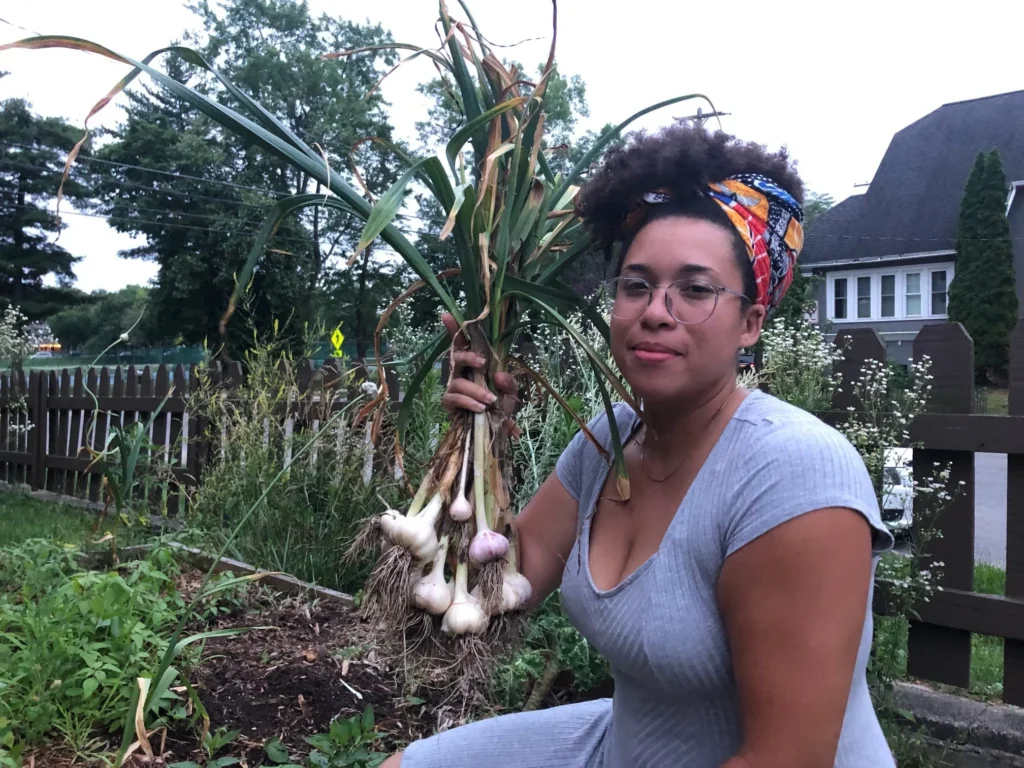
There were two pivotal experiences that solidified Alita’s mission. The first was her discovery of colony collapse disorder. Up until that point, she hadn’t fully recognized the influence humans were having on the well-being of our greater world. The destruction and degradation of nature for profit weighed heavily on her heart. Alita elaborates, “I think that when you are devastated by something in the world, you have an opportunity to either sit in the grief of it or let it guide you and drive you to do something about it. This was that type of grief and heartbreak that really motivated me. I recognized that I couldn’t unsee or un-feel how our insect population is going endangered and extinct. I felt responsible for that as a part of the human species. We had a role in compromising their ecosystem that results in death and destruction of their colonies. We also have a role in helping to fix it.”
“I think that when you are devastated by something in the world, you have an opportunity to either sit in the grief of it or let it guide you and drive you to do something about it.”
The second experience came when she was visiting a Michigan food bank. As she surveyed the food resources there, she noticed a pallet sitting outside of the cooler. It was overflowing with fresh fruit including pineapples, mangoes and more in July’s heat. Alita was struck that this nutritious food was rotting just outside the cooler, that all of the resources and labor that went into growing the fruit and shipping it all the way to Michigan were for nothing. She was alarmed that there were hungry people in the community that would have loved to eat this quality of food. Alita recounts, “It was another moment of devastation for me. I wanted someone to do something about it. There are people living in poverty that would have loved a freshly cut mango and it’s here and they can’t get to it and I’m watching it rot. I realized in that moment that there is all this red tape, and our food system has major gaps when it comes to feeding people even when that food is donated.”
A Generosity Economy
As she carried the burden of this new awareness, Alita sought a life of service to people and the natural world. She decided to get a degree in environmental science and sustainable business at the University of Michigan and graduated in 2020. As she went through her coursework, the idea of starting some sort of social-equity-driven food business kept popping up in her mind. Alita wanted to open a grocery store that provided nutritious food options for her community. She used her time in school to firm up the concept and after graduation, she dove in headfirst. Alita explains, “Whenever I had the autonomy to pick a project topic at school, or when I had free time, or when I’d come across people with food retail experience, I worked toward developing this concept. When 2020 hit, and suddenly there was this mass-experienced food insecurity that many communities hadn’t experienced in America before, I knew that despite being a new college grad and not having the amount of money that one should have when they start a grocery store, that I should go for it because the timing was right.”
I realized in that moment that there is all this red tape, and our food system has major gaps when it comes to feeding people even when that food is donated.
To Alita, the circumstances of 2020 made it possible to start having the broader conversations surrounding our food system and its limitations. After a wildly supported crowdfunding campaign, she opened the store. It was a grassroots experience from start to finish, and Alita attributes much of the confidence she has today to the successful launch of her concept. At the grocery store, it was Alita’s first opportunity to explore the idea of what she calls a “generous economy.” The store had a donations collection at checkout where patrons could contribute money toward the costs of fresh produce, dairy, bread, eggs, and meat. This allowed Alita and her team to sell those items at the wholesale price, a subsidy that made her most nutritional options more accessible to all. Alita shares, “We were trying to create a generous economy that flowed both ways, not just a charitable situation. Putting wealthy people on the side of receiving was really important. It was more about a mindset shift, a societal shift. There are a lot of dangerous and unhelpful power dynamics that are associated with charitable giving.”
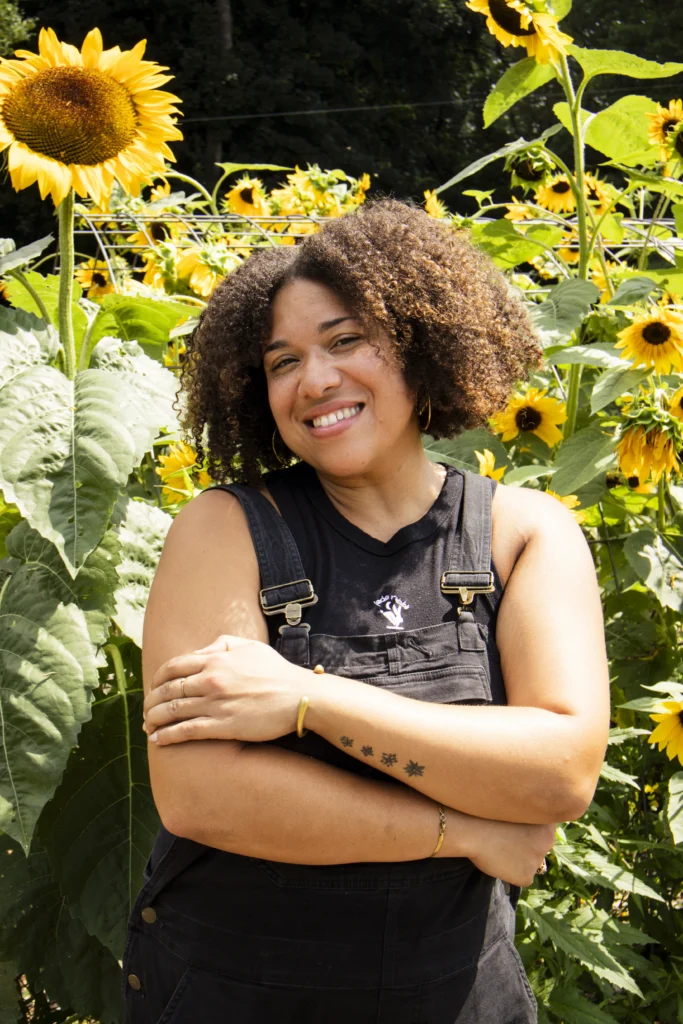
Through the grocery store, Alita made real-life connections with countless farmers and artisans. It was during that time she was contacted by Payge Solidago to help start a local chapter of the National Young Farmers Coalition. The project was being championed by women and queer farmers who wanted to start the chapter hoping to specifically support land justice for people of color in their region. Their main goal was to address the inflated real estate costs that prevented people of color from acquiring land to farm on. Alita’s alignment with the values of the organization was instant and the chapter was formed in 2021. In 2022, Alita started Jade Rabbit, an organization meant to capture the collaboration opportunities that became available through her grocery store business. The concept’s intention is to combine real boots-on-the-ground work with expansive educational outreach. Alita notes, “Today Jade Rabbit helps install, activate, and maintain community gardens. That’s half of the work. The other half of the work is organizing and curating food-based projects.”
Jade Rabbit helps curate projects and develop strategic plans for organizations actively tackling issues of environmental protection and food injustice. Projects have included working with the Michigan Department of Education navigating farm-to-school efforts and training food service staff to learn how to work with whole foods. Jade Rabbit also works in the private sector, helping local companies like The Purple Carrot strategize sourcing local food.
Wisdom from the Trees
More recently, Alita has been feeling the call to the land. After so many years experiencing the magic of urban farming and how it ties people to the Earth and each other, she felt a call coming from a deeper place, a yearning to be more spiritually embodied with nature. Alita sold her house and bought a 10-acre apple orchard in Manistee, located about one mile from Lake Michigan. The abandoned orchard rests in a part of the state where Sequoia trees grow—a rare and magical feature to be found so far from the trees’ native range. With her now deep fluency with matters of food sovereignty and the climate crisis, Alita knew that states with more temperate climates and access to fresh water were going to be important resources in the future. Given her enduring mission of social and environmental justice, she felt that the purchase of the property was an opportunity to participate in developing the systems by which precious natural resources would be revitalized, protected, and shared going forward.
We were trying to create a generous economy that flowed both ways, not just a charitable situation.
Planted in the 1970s, the trees are old and unruly. Invasive undergrowth grows cluttered under the winding branches. These old trees were in need of help, but Alita could feel their wisdom streaming through. Alita elaborates, “The trees are no longer producing in a commercial sense because they haven’t been pruned or cared for, but we have started doing that. We have started clearing out invasive species, clearing out dead trees, cultivating areas where people can enjoy the space. We have planted wildflowers in areas, built a huge deck, added a camper, and have started revitalizing the space with the goal to share it.” It was while she was beginning the hard work of bringing a farm back to life that the ultimate exploration of the “generosity economy” appeared on her path.
Developing an Earthen Heart
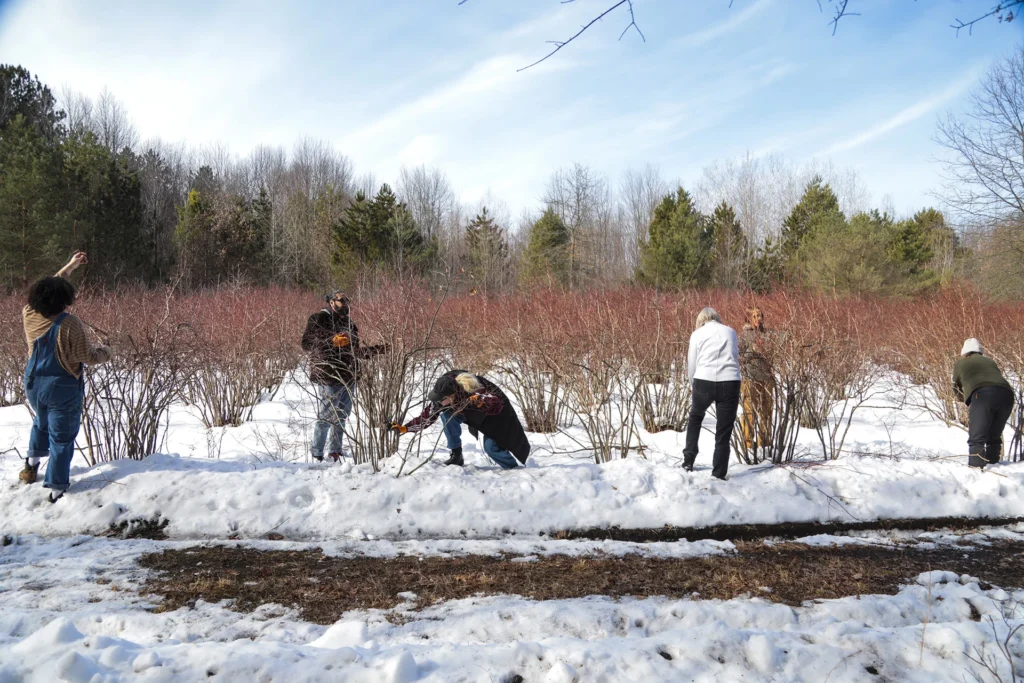
When the opportunity to become the primary steward of the 19.9-acre Bangor Farm with Earthen Heart Farmland Commons was presented to Alita, it was a lot to process. Alita shares, “I had to really sit in the lesson that I was trying to teach people about being on the receiving end of generosity. I had the thought, should I leverage this opportunity for someone else?And I had to stop myself and recognize that it was okay, that I was good enough to be the receiver of this. I had to challenge some ideas of self-worth for this project.” After meeting with co-executive directors Ian McSweeney and Kristina Villa and transitioning landowner and donor Julian Lauzzana, all parties felt comfortable moving forward with Alita’s vision for the farm in Bangor, Michigan. The property features a third of an acre of mature blueberries, assorted plantings of nuts, fruits, and herbs, as well as ponds, a home, a pole barn, a tiny house, and more.
While initially overwhelmed by the opportunity, she sees clearly how this unfolding is the natural confluence of her life-long spiritual journey of creating spaces where all living things can thrive together in harmonious equity. Alita explains, “My sense of responsibility continues to be strong in my life, and I feel that with this project we owe it to everyone who has donated land, has received land, or intends to donate or receive land in the future, to do a good job by this project. We must show what is possible when you collaborate with people who have a sense of responsibility to the community and to the Earth. I am honored to answer the call for that.”
“I am trying to stay grounded in the pace of nature and in the pace of deep trust, in deep relationship building.”
As visions begin to materialize and the farm feels the touch of new hands, Alita is committed to gleaning the wisdom from all of her previous endeavors and entering this project with the kind of attentive care that it requires. Alita affirms, “I have learned through my experiences some key foundations of collaboration. One of the big take-aways from that is moving at the speed of trust. I can move a little too fast sometimes because I am so excited. My youthful energy affords so much power and momentum, but it is not possible to move intentionally in that way. You might miss some things moving that way. So, I am trying to stay grounded in the pace of nature and in the pace of deep trust, in deep relationship building.
I’m leaning into listening to the land and she speaks seasonally, slowly. Julian has also been a great mentor when it comes to challenging the pace of capitalism. The generous economy moves very differently than what we’re used to and so must we as we are birthing the next iteration of how we relate to food, land and one another.”
To foster the environment she seeks for both experiencers of the property’s future offerings and for those who will dedicate their time to the farm’s care, Alita is exploring bringing on farm collaborators. Alita’s hope is that a diversity of experiences and perspectives, balanced by shared mission alignment, will create the greatest opportunity for harmony between the land and the people.
Connecting with the World to Heal
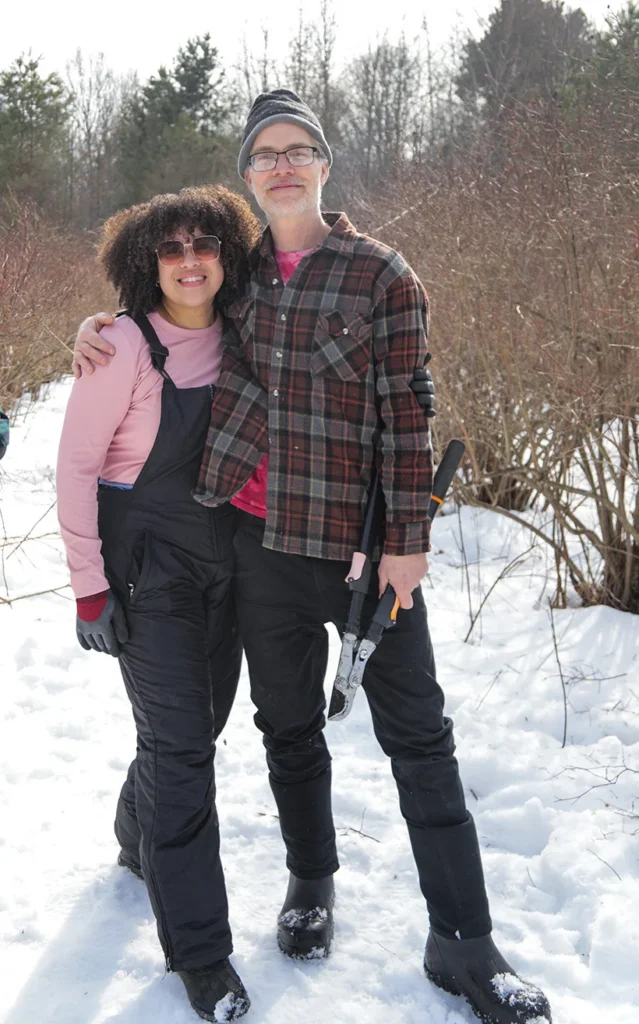
While Alita’s journey appears from the outside to be a truly guided path, she has approached each part of her life one step at a time. Integrating heart and mind in this work has been one of her greatest strengths, and the Earthen Heart Farmland Commons will benefit directly from the resulting wisdom. Alita notes, “Overall, what we want the farm to feel like, is a sanctuary. We want the farm to feel like a respite, or sabbatical from society. It is for people who are tired, who need to rest, and want to tap into the potent healing qualities provided by Mother Earth.” Alita knows from experience that healthy foods foster strong bodies, and healthy landscapes are healing for the soul. As she and her team begin to make plans for the future, the stewardship of the plants and growing spaces is already underway. Alita sets the intention, “We’ve gotten started; we’ve had our blueberry pruning party, the freedom school camp, we’re actively managing the land and looking forward to bringing the community in more and more.”
Here at The Farmers Land Trust, it is our ultimate goal to transform land ownership in the United States. We are so grateful to people like Julian Lauzzana who donated this farm to create a community asset meant to be shared. We are grateful to incredible spirits like Alita Kelly for taking on the heavy work of stewardship and providing offerings to the community from that shared resource. With Alita at the helm, we know that the farm and people will thrive and that it will inspire countless more around the country to take an active role in protecting our farmland and bringing more social justice into our ailing food system.
Alita knows from experience that healthy foods foster strong bodies, and healthy landscapes are healing for the soul.
A Gift for Future Generations
The gift of the Bangor Farm was the first step in securing a nourishing future for the Earthen Heart Farmland Commons. Now it is our turn to help support this project. As it stands now, the farm property is in need of some essential infrastructure upgrades that will allow Alita and her team to see their visions through.
If you would like to donate to support Alita’s essential work, please visit our website to learn more.