A Song to Last Generations: The New Stewards of Blue Rock Station
Narrated by Aleeyah Frye
Too Good to Be True
By the time Sarah and Jason Ricks heard about Blue Rock Station, they had already shrunk their lifelong dream of owning a farm more times than they could count. Sarah remembers, “It almost felt too good to be true.” What began as a desire for “just enough land to grow our own food,” had been whittled down to quarter-acre listings and raw parcels they could not afford to build on. In Michigan’s tourist economy, where they first pursued this deep-seated call, they were outbid again and again. When they moved back to Ohio to be closer to family, land was available but no more accessible.
Sarah explains, “From Ohio, we figured we could save more money, and we’d be able to buy a place and establish some roots. We were exhausted with the continuous renting and moving around, and we were excited to be close to our family. We started working with a real estate agent, and we began looking at lots of different places. We finally decided that maybe we should just buy raw land.” The Ricks were not simply seeking acreage to accumulate real estate assets. Jason and Sarah wanted to settle somewhere within a living ecosystem in hopes of developing a deep relationship with a piece of land. They dreamed of a home where their children Corbin and Cora could grow up with dirt under their fingernails and food on the table that had come from their own hands. Instead, like most young farmers looking to take root, they found themselves in the never-ending chase of moving, renting, and waiting.
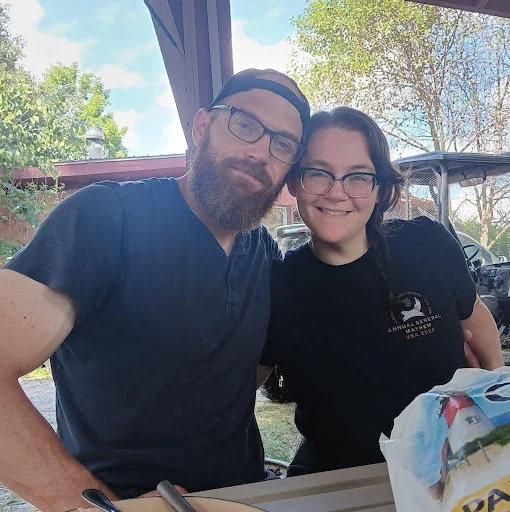
When the pandemic hit in 2020, Sarah and Jason lived in a townhome in Ohio. They got tired of waiting for the ideal situation to arise and decided it was time to take action to make their family more resilient to the turbulent future. Jason began by growing microgreens and that small step stirred in him a remembering of his lifelong connection to nature. When Jason was growing up, he had moved constantly, following his father’s work from Albuquerque to Louisiana, from Florida to Iowa. Each place left an imprint— the arid landscapes of New Mexico with the beautiful cultural influences of the Pueblo, Navajo, and Apache tribes, the electric pulse of Louisiana’s swamps and jazz, a neighbor’s orchard in Florida where he brought home star fruit, mangoes, and oranges, tasting sunlight for breakfast every day, and finally, in Iowa, among fields of soy and corn.
Similarly, Sarah had always imagined farming. “Probably since childhood,” she says, “I have always wanted to farm or homestead.” Her grandparents kept a hobby farm, and her ancestors in Kentucky were tobacco farmers. Though she pursued other paths, first firefighter EMT training, then early childhood education, the longing never left.
“It almost felt too good to be true.”
Sarah and Jason met through firefighter EMT training and quickly fell in love. Living first in Cincinnati, they moved to Michigan so Jason could pursue his passion for brewing craft beer. After a fateful meeting with an environmental activist named LuAnn, Sarah and Jason began living on LuAnn’s property and found themselves stewarding it. Sarah recounts, “We helped tend small gardens that she had put together in the forest. This experience really instilled in me that this is how I wanted to live my life. She was a part of trying to help us find land, and she was sad that we left Michigan, but the truth was, it was just too expensive. We looked at one property that was an acre of land, and they were asking for $125K, and the house wasn’t structurally sound.”
Life Is More Than Money
After recognizing that they didn’t have the funds to make their dream come true in the beautiful, touristy lake country of Michigan, they moved back to Ohio and continued to work toward their dream. Sarah and Jason began growing their own food and reading about permaculture and regenerative agriculture. They encountered the work of Richard Perkins and studied the concept known as the Eight Forms of Capital. This idea that wealth is not only financial but also living, social, cultural, and experiential liberated them from the confines of the hyper-capitalist mindset that money was king. They saw themselves, their interests, their relationships, and their skill sets as valuable assets that could be used to create the reality they hoped for. It began to reframe their situation. They did not have much money, that was true, but they did have ambition. They decided to trust what was on their heart, their willingness to work, and their insatiable hunger to learn.
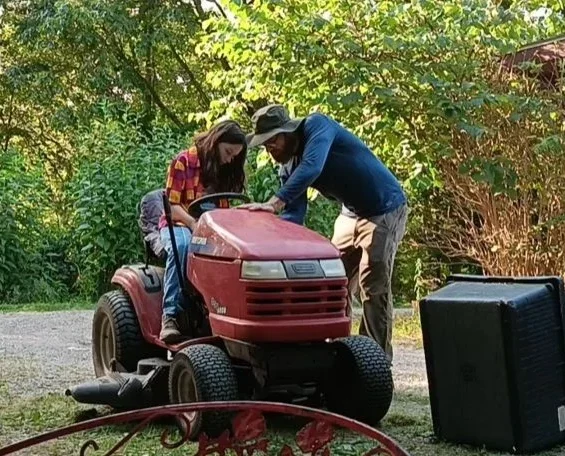
“I realized we weren’t building anything financially living the way we were,” Jason reflects. “And we also weren’t gaining any skills. As a father, I want to give my kids the skills they need to be self-sufficient and resilient.” Along with studying the many regenerative methods of farming, they also began to explore the omnipresent and powerful cycles and symbiosis of nature. They took time to learn about ecosystems and to experience them in person. They dedicated their time to the art of ecological literacy. Jason explains, “When you do that, you can be anywhere on Earth and feel the richness of the place. Once you get the eye and the sense for how nature is expressing itself, you can see the lesser-noticed things and build this connection with the land. This creates these powerful moments in your life, and it’s almost like these places and people and times in your life are a song.”
Both Jason and Sarah feel strongly that the separation of humans from the landscape has been detrimental to all people and places on our shared Earth. Though they did not grow up as farmers, this realization was powerful enough to start them on the path. They saw clearly that the lifestyle they were living could be better not only for their own family but also for their community and the world. Jason continues, “The cause of many of our problems today can be traced back to people’s lack of connection with the land. Having a connection to the land gives you a respect for it and can even be healing for the land and people. As privatized land continues to be unaffordable for most, less and less people will be able to interact with natural landscapes, and our problems will only continue to grow.”
An Invitation to a New Reality
Their introduction to Blue Rock Station came by way of their vibrant social capital. After years of working with children and homeschooling her own kids, Sarah became the board president of the Sycamore Learning Cooperative, which serves young families in the rural area of Perry County, Ohio, where the Ricks were hoping to eventually reside. The co-op brings together different people who homeschool their children, and it has allowed Sarah and Jason to get to know many homesteaders and farmers. Included in this mix of resilient parents was the executive director of the Sycamore Learning Cooperative and owner of Novel Tree Farm, Molly Lones.
As their chances seemed to only get slimmer, Jason and Sarah compromised and shrunk their dream down to finding a raw piece of land. They thought that if that was all they could afford, at least they could use eco-friendly and reclaimed building methods for their home and other structures. Another fateful moment arrived when Molly contacted Annie Warmke, farmer and owner of Blue Rock Station farm in Philo, Ohio.
This creates these powerful moments in your life, and it’s almost like these places and people and times in your life are a song.”
Molly wanted to help Jason and Sarah move to Perry County so the family could more fully integrate into the community. Unfortunately, though this county is located in rural Appalachia, land was still expensive. “Molly knew we were looking for a piece of land. I was very interested in trying to find something in Perry County because that’s where a lot of the other co-op parents lived,” Sarah laments. “You’d think that in rural Appalachia, the land is going to be cheaper. It is not accessible to us and is affordable only to people with wealth.”
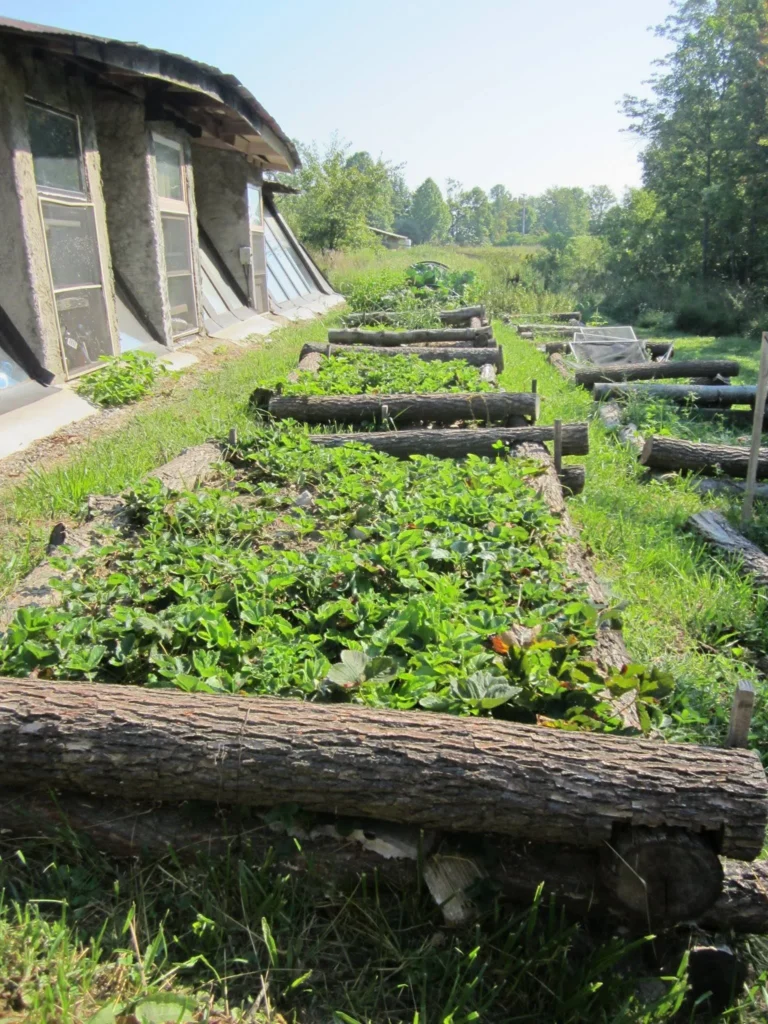
Annie was selling off farm equipment in preparation for her exit. She explained to Molly that the farm, which included 38 acres of gardens and forest, the first Earthship built east of the Mississippi, and numerous other eco-built outbuildings, would soon be the Blue Rock Farmland Commons, being led by The Farmers Land Trust. She let her know that they were currently seeking future stewards for the land. After learning about this opportunity, Molly immediately went to Sarah with the news. “Molly came to me and said, ‘This is perfect for you.’ She knew we wanted land and encouraged us to apply for the farmer role at Blue Rock Station,” Sarah recounted.
The opportunity itself was beyond belief. An elder woman farmer who had spent decades designing and building an ecologically dynamic farmstead was securing her legacy by donating a portion of the land’s value to The Farmers Land Trust to form a Farmland Commons. The Farmers Land Trust has been tasked with fundraising the remainder needed for the land’s acquisition, ensuring the future steward of the property would enter the role without the financial burden of the farm itself. When they were honest with themselves, they weren’t even sure if they would be good candidates. They didn’t grow up on farms or study agriculture. Everything they knew thus far had been self-taught. It seemed like a long shot that they would be considered for the role at all.
They hesitated and didn’t immediately apply, but Molly followed up. “Molly said that if she could have jumped on an opportunity like this one when she started her farm, she would have. She stressed how special it would be to steward a piece of land without the burden of land debt,” Sarah noted.
“You’d think that in rural Appalachia, the land is going to be cheaper. It is not accessible to us and is affordable only to people with wealth.”
The New Stewards of Blue Rock Station
With that last push from Molly, the Ricks submitted an application. Annie called Sarah, and even through the phone, she knew she had made a true heart connection with Annie. They were invited out to the farm to see it for themselves and to meet Annie and her husband, Jay, in person. Sarah and Jason loved the energy of the place, and Annie fell in love with Corbin and Cora. While they still weren’t sure what the chances were that they would be selected for the role, they were grateful for the opportunity to come into a relationship with Annie’s living work of art and her vibrant community of supporters.
After the initial meeting, they met with Kristina Villa, co-executive director of The Farmers Land Trust. Kristina pressed to make sure they understood the responsibility they were looking to take on. She knew that many wish to farm but don’t truly comprehend the amount of effort and dedication that is required to be successful. Jason remembers, “She basically explained that she didn’t know much about us, but if we had just been watching YouTube videos about how fun and exciting agriculture is, we might not be up for the realities of it. I’ve worked hard on jobs all my life, and I knew we could handle it and even enjoy it.”
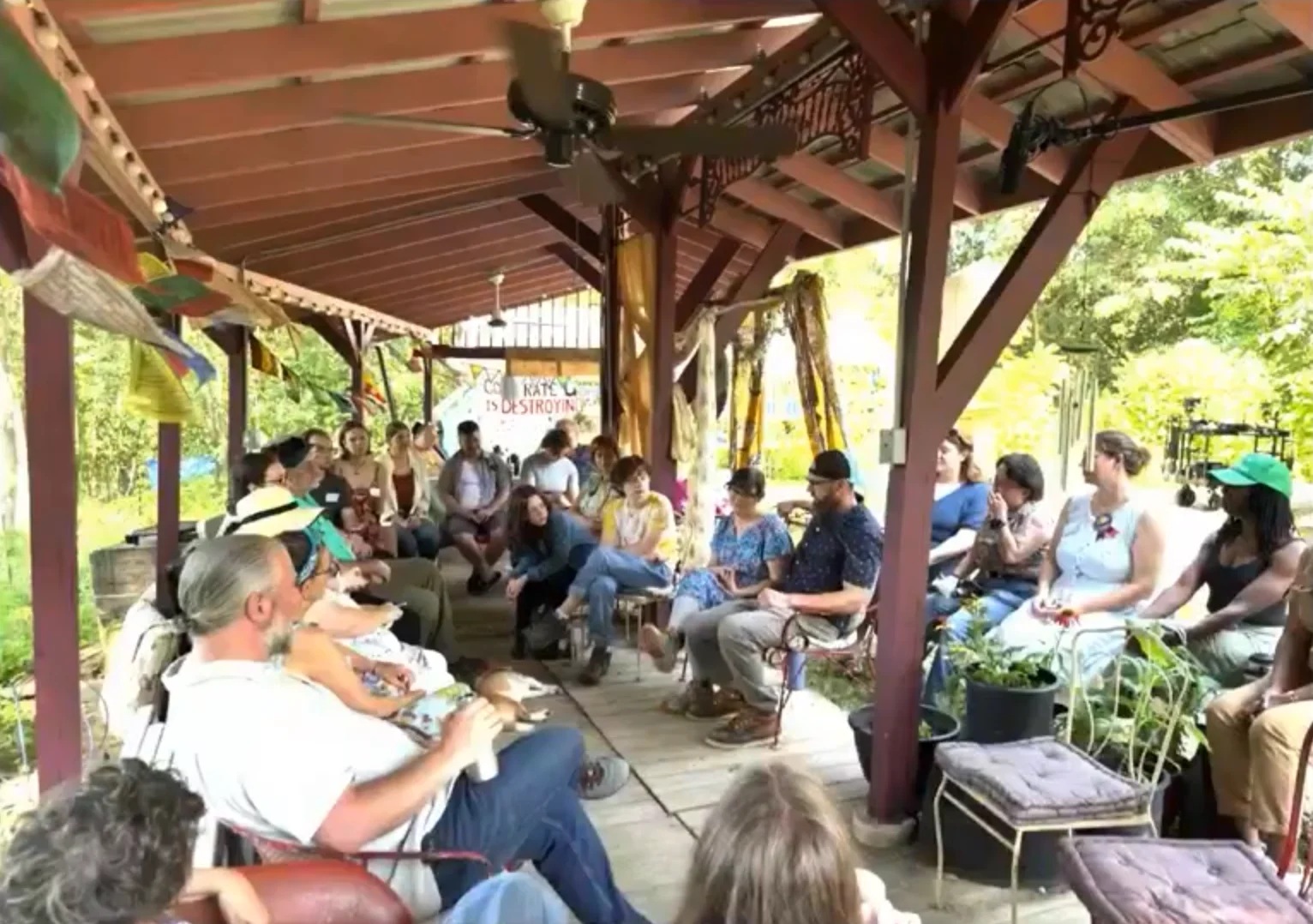
The application process was thorough. Annie had created a vetting committee of former interns and other farm supporters to decide on the next stewards of the land. The team came up with a rubric for sorting through the different applicants to see who would be the best fit. The applicants were asked questions about their experience in farming, about their skill sets, and about the size of their community of supporters. While Annie did not see direct experience as being the most important qualification for the job, she wanted to make sure that whoever took over the farm would be capable of learning by doing and would stay mission-aligned in practice and ideology. She was interested in their views on the world, in their financial literacy, and in dealing with the less glamorous intricacies of business ownership. After interviews and a Zoom meeting, all of the vetting committee members cast their vote for who they thought should take over this beloved farm.
Meanwhile, Kristina encouraged Sarah and Jason to keep going out to Blue Rock Station to explore the lifestyle and see if it would be a true fit for their family and to strengthen their bonds to Annie, Jay, and the landscape. Sarah explains, “We kept going out to Blue Rock Station after we met Annie and started helping on the farm. We started to develop more of a connection to the land, which solidified to us that this was the right place for us to be.” Toward the end of the decision-making process, they decided that no matter what happened, it was all worth it. For Sarah and Jason, getting out of their comfort zones and applying for the position revealed to them that this was truly what they wanted, and it gave them the courage to keep chasing their dream at Blue Rock Station or wherever this new path was taking them.
It was at an event attended by the BBC Storyworks Commercial Productions that Annie, Jay, and the vetting committee announced the decision to have Jason, Sarah, Corbin, and Cora take over the farm. Surrounded by the community that had supported Annie’s visionary work for decades, they were ushered into the roles of stewards with a living, dynamic landscape ready to grow. They accepted the position and are now preparing for what their future at the Blue Rock Farmland Commons will hold.

The Ricks have entered into a transitional, 18-month lease with Annie and Jay, and have dove headfirst into the work of cleaning, moving, and setting up a place for their family to call home. Jason affirms, “We knew we would be able to do it because we were both following our hearts. We know in our hearts that this is what we want to do. Every time we’ve done that as a couple, we have been successful.”
In Relationship with Land
In a more conventional farm transition, time is a luxury new farmers cannot typically afford. The debt taken on by the next generation demands of the people and the landscape, immediate productivity. Systems are imposed quickly because the income must begin to flow. Fortunately for Jason and Sarah, the structure of the Blue Rock Farmland Commons offers something different. “The good thing about The Farmland Commons,” Sarah explains, “is that we’re able to observe this process and move slowly. Instead of imposing our will on the land, we can take time to understand it.” This is something truly unique and fully embedded within the Farmland Commons structure. The Farmers Land Trust not only secures farms that are vulnerable to being lost and makes them accessible to people and communities that would not typically be able to afford them, but it also allows for a continuous cycle of regenerative stewardship by removing capitalism’s greatest and most destructive fuels: urgency and debt.
Instead of imposing our will on the land, we can take time to understand it.”
Jason expands, “With Blue Rock Station, we saw that it was this piece of Earth that we could enhance and integrate our lives into. This was our chance to grow, to grow in community, and to continue a song that can last into the next generation and beyond. Through The Farmers Land Trust’s structure, there’s this impactful generational succession of resources that isn’t reliant on the capitalist model of profit and debt.”
A Vision for the Future
Sarah and Jason realize that the Blue Rock Farmland Commons is a unique place. It is a farm, but there is the opportunity for so much more. They are interested in exploring ecotourism, which is a revenue stream Annie has used in the past. They hope to expand and enhance the beautiful system of trails through the forests on the land and possibly set up Hipcamp sites around the acreage. Jason elaborates, “We see the Blue Rock Farmland Commons as being a connection to the land for many people. People can come from the city, and the farming ecosystem and way of life may resonate with them. This might ignite in others a similar passion for a return to nature.” Sarah and Jason also feel that when people come to Blue Rock Station in its newest form, they may be inspired by the work of The Farmers Land Trust, and it may encourage others to consider the Farmland Commons as an option for their own land.
Jason and Sarah have many aspirations, but they want to take it slow. In addition to their passion for the ecological integrity of the land, they also want to honor the legacy that Annie and Jay have left in their care. While they may implement changes over time, they hope to acknowledge the needs of the land and the wisdom of their elder farmers every step of the way.
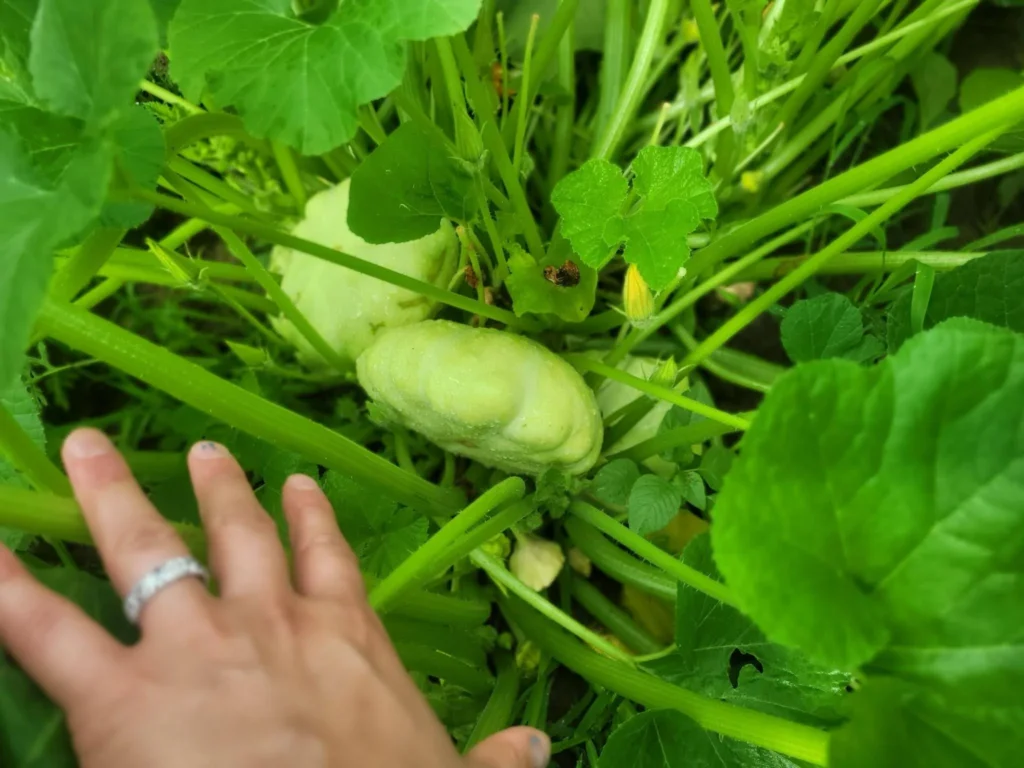
Their plans for the farm include a market garden, a donations garden where all produce would be provided to the local food bank, and the integration of a small herd of goats and a small flock of chickens. With the farm, they hope to hold events that are celebratory, community-building, and educational for children and adults alike. As two people who will be learning a lot themselves, Sarah and Jason are excited to share as many opportunities as possible with others who feel called to return to a lifestyle enmeshed with the living world.
A Song to Last Generations
Blue Rock Station is already alive. There are fenced pastures, perennial food forests, a high tunnel, solar panels, goat barns, cottages built of soil and straw, and thousands of trees planted over decades. Sarah and Jason are stepping into a system that is primed and ready for its next chapter. They have inherited decades of wisdom and will begin their own journey of land stewardship with that intangible, invaluable inheritance. It will be their responsibility not to replicate Annie’s vision for the land, but to evolve it.
Corbin and Cora are already weaving themselves into the fabric of the place. Corbin, who loves technology, connected with Jay through his work with solar systems. Cora, an artist, sees beauty everywhere and has come to see the farm as home. The Farmland Commons model has given the Ricks a true opportunity to develop a relationship with the land. Jason affirms, “Something I really value about the work of The Farmers Land Trust is not just the protection of the land, but the ways it honors the people who have stood on the land before us. Our opportunity is to carry forward their song, and that song can be a point of connection for all who come after us. Together, we can carry forward that communal generational well-being. Our opportunity is to carry forward that song.”
The Blue Rock Farmland Commons is not simply a legal arrangement; it is an instrument that holds relationships. It ensures the melody started by Annie and Jay is not silenced by the market. It protects the land from speculation and invites stewards who understand that inheritance is not just about ownership but is, more importantly, about dedication. Sarah and Jason were once outbid on quarter-acre lots being sold on the market, and now they are stepping onto 38 acres held in common, not because they won a bidding war, but because they were willing to listen, to work, and to open their mind to a new structure for land ownership. As always, their successes in life sprout most easily from the moments where they have boldly stepped forward, following their hearts into the unknown.
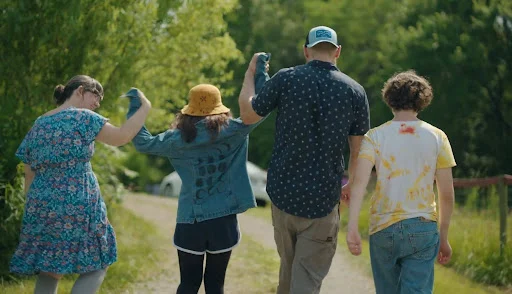
“Our opportunity is to carry forward their song, and that song can be a point of connection for all who come after us.”
And in the foothills of southeastern Ohio, beneath fruit and nut trees and solar panels, among barns waiting to be filled and gardens ready to be tended, a new movement has begun. As this transition begins to unfold, there are several ways you can support the Ricks, the Warmkes, and the communities that will be nourished by the offerings of the Blue Rock Farmland Commons:
Ways to Support:
- Make a one-time or monthly tax-deductible donation today!
- Invite friends to join you by matching your donation.
- Give through your Donor Advised Fund (DAF) to help support the transition of Blue Rock Station into the Blue Rock Farmland Commons.
- Reach out to us today to learn more about the multiple opportunities to engage with the Blue Rock Farmland Commons.
- Sign up for the Blue Rock Farmland Commons newsletter for project updates and upcoming opportunities to get involved.