

The Seeding of the Earthen Heart Farmland Commons
Narration by Aleeyah Frye
Founding Farm Location: The founding farm of the Earthen Heart Farmland Commons (EHFLC) is located in the town of Bangor, Michigan, situated in the Southern Great Lakes Forest ecoregion. The land is located within a temperate “Fruit Belt” that is regulated by the lake effect caused by the unique dune system that extends for hundreds of miles along the shores of Lake Michigan. This portion of the Lake Michigan shoreline is essentially parallel on opposite sides, with Illinois and Wisconsin on one side, and Michigan on the other.
Founding Farm Size: 19.9 acres
Current Land Use: The land is a dynamically managed permaculture system featuring a combination of established plants found on the property and plants that have been added over the years to interact with the abundant food forest. Nested into the acreage are a third of an acre of mature blueberries, assorted plantings of hazelnuts, chestnuts, apples, cherries, peaches, apricots, plums, Asian pears, black raspberries, blackberries, red raspberries, wild strawberries, dewberries, and much more.
In addition, there are plantings of edible and medicinal herbs including thyme, boneset, bee balm, mint, oregano, yarrow, mullein, dandelion, and bergamot. Plantings of asparagus, onion, and garlic have also naturalized on the landscape. The land is eager to support the next loving stewards who can offer some regenerative management and continue harvesting, pruning, planting and engaging with the food forest, and who will continue to steward the Earthen Heart vision for future generations.
Current Land Stewards Involved: Alita Kelly of Jade Rabbit, and Julian Lauzzana
Current Community Partners: Earthen Heart LLC
Farmland Commons Incorporation Process:
- 2025: Relational work with people, organizations, and community seeded by the first farm transition and the first leasehold conveyance
- 2026: Development of organizational collaborations and the Earthen Heart Farmland Commons vision and structure through shared agreements, understandings, and bylaws, and state incorporation
- 2027: Federal filing and operationalization of 501(c)(25) shared collaborative structure
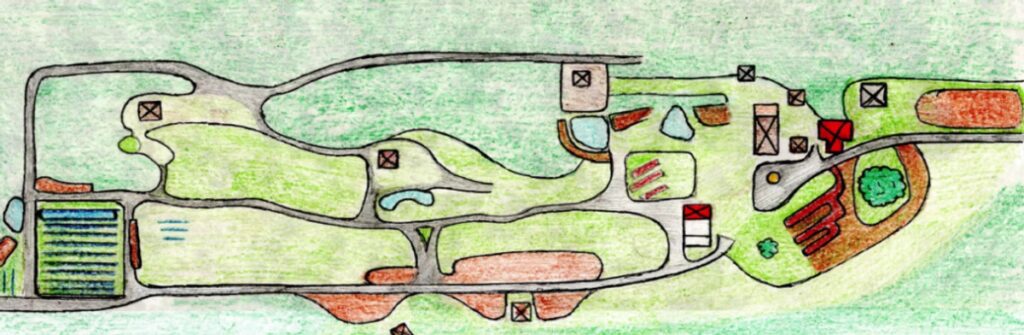
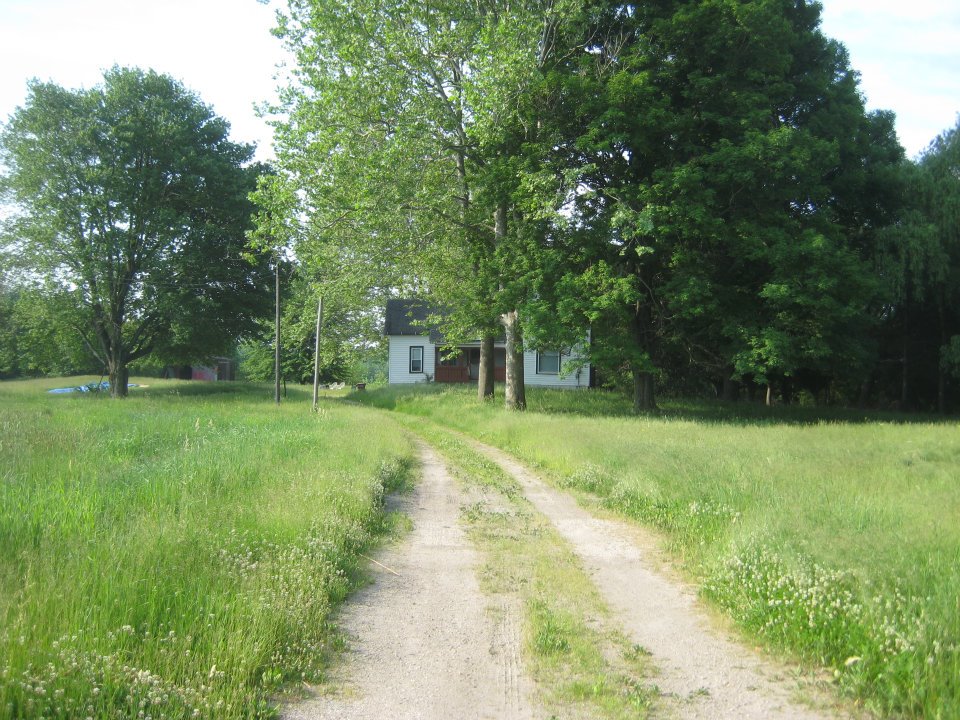
Special Features: The land features native foragables for wild crafting, ongoing perennial plantings, a pole barn, seasonal ponds, Chinampas, a tiny house, an old outbuilding that is in need of repair or removal, a natural spring, various campsites, a dugout for an earth building in the forest, and a renovated farmhouse built in 1911.
A Journey Toward Stewardship
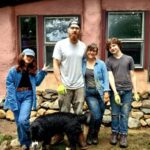
Julian Lauzzana grew up in Kalamazoo, raised by a single mother. As the fifth generation of the Peterson Spring Corporation, he was steeped in shareholder meetings, boardroom discussions, and the legacy of a family business that built its reputation on precision wire forms and high-performance springs. His maternal grandfather came from another era of company loyalty and was known for never firing any of his employees to which he felt responsible. His grandfather Peterson always found a role for interested family members to join in the work, and family vacations were often blended with business. As a result of generational shifts in organizational culture, as well as global trends, the company eventually faced bankruptcy. The family decided to hire a turnaround team that reshaped the company with layoffs and closures. By the time Julian and those of his generation were old enough to consider deeper involvement at a management level, the family’s connection to the business was distant, and staffed by a capable non-family team, and the decision was made to sell the company.
When Julian received his share of the proceeds, he chose to invest his multigenerational wealth into something tangible: land. To him, the Earth felt far more secure than numbers on a screen. The decision has led him to hold several parcels of real estate, including the 19.9-acre farm in Bangor, Michigan, which is the first parcel to enter the Earthen Heart Farmland Commons. For Julian, the land is both grounding and humbling, a place that feels larger than any one individual’s possible claim, and he sees stewardship and ownership of the land as a privilege he feels compelled to share.
“I chose land because the Earth felt far more secure than numbers on a screen.”
Cities, Arcologies, and the Call of the Land
Julian did not grow up in the countryside, nor did he initially seek a rural life. He thrived in cities such as Kalamazoo, Boston, New York, Portland, and Ann Arbor. While working professionally in the culinary arts in various capacities in restaurants and cafes, he also engaged in arts and media production in radio, television, film, visual arts, music, theater, audio recording, and live events. Julian then spent time living at Arcosanti in Arizona, an experimental “arcology” (eco-city of the future), designed by Paolo Soleri that fuses dense urban architecture within the local ecology. Arcosanti proved formative for Julian, a place that captivated his imagination and simultaneously grounded him in the difficult realities of human-to-human dynamics.
There, he encountered both the possibilities and frustrations of communal living within a very hierarchical organization. During this time, he completed his master’s capstone project while immersed in Arcosanti’s nonprofit/enterprise hybrid model and presented an organizational audit to the leadership team that included ideas on how to more fully integrate food systems from the farm to the cafe. The experience left him deeply aware of the challenges of balancing vision and compromise in community life.
It was also at Arcosanti that he met the mother of his daughters, Palma Burdick, who worked in the gallery selling hand-cast ceramic and bronze bells which provided income that allowed the community to continue building the arcology. Together, they raised a blended family of seven children, seeking eco-community opportunities in Arizona, Oregon, and finally Michigan. As family dynamics shifted and nothing lined up with an existing intentional community, they chose to purchase land, spend precious time with his two daughters and stay near the extended family. The steady pursuit of land-based, community living through the Earthen Heart initiative is influenced by arcology and the desire to integrate more fully with the natural world with family and friends in a more holistic approach than is currently available in mainstream culture.
“The pursuit of land-based, community living was rooted in a desire to integrate with the natural world more fully than mainstream culture allows.”

Homesteading as Protest
For Julian, homesteading has always been more than a lifestyle choice; it has been an act of resistance. His perspective on land has been shaped by the essays of Tolstoy, his time spent at an eco development Xochicalli and at farms in Mexico, inspiration from the Zapatistas Movement, and through studying horticulturist and leader of the Country Life Movement, Liberty Hyde Bailey. Julian developed the notion that those who work the land should have some rights to living on it. Through research and travel, he came to see how narratives of “progress” often masked the displacement of people and the erasure of smallholder farmers and their simple, efficient ways of life. Julian believes in the possibility of modest, self-sufficient livelihoods that combine sustenance with resource sharing, following models like Helen and Scott Nearing in Maine, a trajectory he became deeply inspired by after reading their seminal book, The Good Life.
Although he does not claim the title of “farmer,” he has poured his heart and labor into the Earthen Heart lands, including most recently into orchards of apples and peaches located in South Haven, Michigan. He also tends blueberries, food forests, and trails, and puts much of his energy into food preservation and culinary creativity. With a professional culinary background, his kitchen has become the beating heart of his homestead. He has been producing value-added foods from the Earthen Heart lands and other nearby farms to make many provisions to share with his community including apple cider and other fresh pressed, pasteurized and canned juices, vinegars, wines, sauerkraut, dehydrated fruits and fruit leathers, sauces, jams, and more. Most of what he produces he shares freely and exchanges with friends and neighbors.
For Julian, food production and preservation are less about commerce and more about eco-social realignment—about using our unique gifts and our creations within the landscape in ways that sustain family, community, and values. Julian sees that modern agri-business is focused on the production for sale of commodity goods within a global marketplace, which is less beneficial to life than production for use within our region, which is the primary aim of community-based homesteading. Such practices have been honed and shared in homesteading, the agrarian commons, and subsistence agriculture for centuries, but are currently at risk everywhere on the planet. He sees the dominant paradigm of ecological conservation and modern agriculture as problematic in the sense that they both separate humans from nature rather than integrating them into the landscape.

Wrestling with Ownership
Julian’s explorations into permaculture and regenerative agriculture led him to take an interest in biodynamic agriculture. Though still a complete novice in the biodynamic techniques, he gained an appreciation for the practices through his experiences visiting gorgeous biodynamic farms and eating the stellar quality food they produce. At the 2023 Biodynamics Conference in Colorado, he first met Ian and Kristina of The Farmers Land Trust. Despite the conference’s paradoxical setting, a luxury hotel built on newly developed land, he found the gathering profoundly moving. Kristina’s inspiring keynote resonated so strongly that he teared up while listening alongside his daughters.
Julian felt an immediate resonance with the vision of The Farmers Land Trust. While he acknowledges that he may not fully grasp how every aspect of the complex Commons organizational and legal structure will play out, he trusts the relationships he has made with Kristina and Ian and sees the Commons as a step toward dismantling ecologically and socially destructive systems of land ownership and property management.
Radical Hospitality
Now in his fifties, Julian refers to himself as a “baby elder,” and is ready to balance vision with compromise, and his own individuality with the shared identity found in community. Since 2011, he has hosted many visitors, offering community homesteading and co-stewardship leases, as well as work-trade opportunities such as WWOOFing to people from as far as Australia and Yakutsk, Siberia.
He has opened his home to those in need struggling with the physical, emotional, and spiritual hardships we face as human beings. He has also had to make hard decisions as a “landlord” who “owns” the land in relationship to those he has hosted. Over the years, this has been a deep source of sadness and is part of the motivation for entering into a different land ownership model with The Farmers Land Trust. The lack of counsel available to resolve the community conflicts experienced at Earthen Heart over the years is a large motivator for the work Julian is currently doing with men’s groups and co-ed healing circles today, in his region and beyond.
What guides Julian now is the fostering of loving regenerative communities that expand through building trust and mutually beneficial collaborations. In addition to community homesteading, he envisions someday being involved in more large-scale rural arcologies. He is passionate about working toward reclaiming and strengthening rural communities and Main Street America, built on stronger, more trusting relationships of neighbors sharing food, skills, resources, and care. He currently collaborates with two local centennial, family-owned farms, the Brushes and the Overhisers, one shifting toward organic, and the other strictly conventional. Though not deeply experienced as a grower, Julian seeks to model regenerative practices on small portions of his own parcels as an invitation to the farms and community members around him to explore other regenerative methods.
Julian knows that the best strategy for community synergy is patience combined with action, and while he doesn’t agree with all of the conventional practices being used by his neighbors, he respects the legacy and effort that has sustained these farms across generations. During the winter of 2024/2025, Julian hosted several events called “Celebrating Michigan Farmers,” including a potluck, value-added food share, and roundtable community discussions. The first of these gatherings included representatives from both the Brush and Overhiser families.
Community, for Julian, is not an abstract goal but a lived practice of healing and connection. His participation in men’s groups and mixed-gender healing circles informs his vision of trusted networks built on resonance, autonomy, and shared commitment. In his words and actions, he embodies the search for ways of living that honor land, create more elegant alternatives to modern multi-national capitalism, support families, and bring resilience to communities that exist.
The Story of the Land
The region that contains the Bangor property, along the Bangor Covert Highway and located just down the road from the town of Covert, holds a deep history. The land has been farmed for generations by African Americans. According to Anna-Lisa Cox in her book, A Stronger Kinship, this is due to the emancipation of African Americans occurring earlier in this region than much of the United States, as well as a shared desire by the local people of both white and African American communities to live in harmony. The rural homesite on the property was the home of the Parker family, direct relatives of Emmett Till. Elbert Parker raised hogs and blueberries while supporting a large family by working at the local piano factory. This history of the land as a place of sustenance, refuge, and safety informs how the land is approached today and shapes its future uses, emphasizing care, reciprocity, and equity.
The land is exceptionally productive and diverse. Blueberries cover roughly a third of an acre, with multiple varieties that have intermingled, creating a uniquely naturalized “Earthen Heart” variety. Asparagus, garlic, onions, and numerous herbs grow in wildcrafted areas, alongside a wealth of fruit and nut trees including apples, peaches, plums, cherries, apricots, Asian pears, chestnuts, and hazelnuts. Berries such as black raspberries, red raspberries, blackberries, dewberries, and wild strawberries thrive throughout. The productive plantings have matured and grown together, creating a dense and vital, almost jungle-like environment. Trails traverse the property and are maintained with a zero-turn mower, making the landscape accessible for explorations, guided plant walks, camping, urban retreats, field trips, and more.
Water management has been a central focus of Julian’s and remains an ongoing project. The land features several dug, shallow, seasonal ponds currently serving as water stores and habitats for frogs and wildlife. Efforts are underway to enhance hydrology, including the integration of serpentine water flows to support purification and circulation within the greater system. An experimental Mexican chinampa-inspired canal system has been added in one location as a channel between two rows of blueberries. Another is located at the back of the property in a wooded area where there is some stagnant water caused by an over 100-year-old county drain adaptation to the natural river flows, which is also where the natural spring is located.
The Earthen Heart Farmland Commons founding farm is envisioned as a hub for primary land stewards made up of a family or a small collaborative of dedicated individuals who live on-site and guide its use. The vision of the land incorporates opportunities for educational activities, seasonal rentals, food forest development, workshops, and forest walks, all aligned with the goal of sustainable food production and community engagement. Julian received his Permaculture Design Certificate from Geoff Lawton and has worked with others to create detailed mapping and documentation of the land, buildings, plantings, water systems, and infrastructure. This has helped to preserve the knowledge of the land and make it accessible to incoming stewards. These living, collaborative documents are to be used by people, and Julian sees these human relationships and ongoing communications as vital to the success of the collaboration.
Ultimately, the Bangor farm is a dense, biodiverse, and historically resonant space that seeks to honor its past while fostering a regenerative, community-focused future. Its success depends on thoughtful stewardship, meaningful engagement with the land, and a balance between structure and flexibility. Cultivating an open environment for dialogue, conflict resolution, and collaboration is a key priority for this Commons project, ensuring that residents and visitors feel safe, feel heard, and are nourished by their relationships to each other and the land.
Julian is eager to see the space being cared for and providing sustenance for land stewards who seek deep connection to the Earth in an intentional community guided by shared values and agreements. He is excited to continue his relationship with the landscape and for the property to evolve with the spirit of the stewards and visitors who engage with it. This has always been the goal, and with the creation of the Farmland Commons, this alignment will be more fully integrated into the organizational, legal, and administrative aspects of the Earthen Heart initiative.
Creating the Commons
The mission of creating the Earthen Heart Farmland Commons is to build a homestead-centered community food network rooted in interconnected relationships and mutual support. This eco-social network will nourish people, regenerate land, and strengthen the bioregional culture of place, while serving as a radical example of what is possible. To bring this vision to life, we are looking for partners who are ready to invest in housing, entrepreneurship, educational food-based events, and business enterprises. This will ensure a foundation that is both sustainable and deeply collaborative.
A Call to Action
What makes this particular Commons so special is the wealth of opportunities it holds for individuals and community members alike. Opportunities include leaseholding, food and medicine business enterprises, and the potential in the future to accept into the EHFLC multiple real estate locations within one hour of each other in Southwest Michigan. These properties already feature beautifully growing food and medicine plots, and can operate autonomously while remaining interconnected, creating a dynamic framework for collective action and shared resilience.
Get Involved
Community support is a fundamental part of the creation of a successful Farmland Commons. If you’d like to get involved with the Earthen Heart Farmland Commons, there are a few ways you could help the project thrive.
- Ways to Support:
- Make a one-time or monthly tax-deductible donation today!
- Join the Commons project as a collaborative nonprofit partner.
- Support the Commons project as an individual by volunteering or collaborating on food and community events and activities.
Reach out to us today to learn more about the multiple opportunities to engage with the Earthen Heart Farmland Commons.
