Honoring Ian McSweeney: A Life in Service to Land and People
Ian has fiercely advocated for historically oppressed communities and those without access to resources and power.
With so much unfolding today at an unprecedented rate, it is natural for the human psyche to feel set adrift in stormy seas with no hope of ever finding shore. As power in all its insidious forms continues to eat away at our way of life, perpetuating systemic injustices across the globe, it can be hard to know exactly where a single human being fits into the bigger picture and what an individual can actually do to help. Our society may feel purposefully divided into differing factions, but the truth is, we humans are one morphing phenomenon, and our impact on our planet is collective. The places where industry and empire have exploited, devastated, and extracted are a part of our shared history. Fortunately, there are people who have dedicated their lives to defending what sovereignty is left of our communities and natural spaces, and they, too, are pieces of our whole. Their relentless dedication to doing good for the world and their essential and often thankless work anchors us back into the regenerative laws of nature, and their efforts hold our greatest hope.
The choice to spend your life in opposition to the exploitative, concentrated powers of our world is a difficult one to make, but it is one that Co-Executive Director of The Farmers Land Trust Ian McSweeney made long ago. Like all of us, Ian has navigated the dark waters of uncertainty and powerlessness in the face of such tremendous strife on our planet, and yet he has dedicated his life to making a difference. Even more, through his lifelong commitment to a better world for all, he has created pathways for so many others to be of service to the land and people.
Through his commitment to preserving and creating working farms, Ian has learned that true land stewardship extends beyond protecting natural resources—it also preserves and revitalizes the relationships communities have with their local landscapes. Ian views farms as living entities that should remain a part of the landscape they have entwined into long beyond any one farmer’s lifetime. He recognizes the potential of a national effort to prevent working farms from becoming real estate commodities, creating space for them to grow and thrive through resilience and collective wisdom—cultivating ecological abundance and strengthening human well-being for generations to come.
Today, we’d like to tell you a little bit more about our inspiring, hard-working, and deeply committed co-executive director on this, his 50th birthday.

A Growing Dissonance
Fifty years of Ian has been a gift for this planet, and ever-growing communities of people and working farms, and it started well before he was leading the charge on de-commodified farmland protection. Growing up in Halifax, Massachusetts, Ian’s childhood memories were steeped in dense colonial histories and inherited narratives. His surroundings offered up stories and heroes that he did not necessarily agree with and seemed at odds with the powerful, emotive elders who helped shape him, including his carpenter father, midwife mother, and world-traveling aunt. Ian grew up in a home that kept goats and other small livestock, and he was raised to appreciate the gifts of the land. Due to his father’s craft, Ian was tasked with helping on restoration projects of old and sometimes historic buildings and farms. Working for his dad, he quickly got a sense of the value of well-made infrastructure built to last for generations and the importance of its preservation for future use.
While growing up in the proud land of the Patriots from descendants of the Mayflower, Ian felt a sense of dissonance that he didn’t quite have the language to describe. Public celebrations and historical re-enactments often centered stories of colonial superiority and manifest destiny, stories that never fully rang true for him. Even as a child, he felt that something essential was missing, and that the prevailing narratives seemed to be failing us all.
Ian followed his intuition, and instead of accepting the norms and the growing separateness he saw being fueled by our colonial, patriarchal history, he began orienting his life toward repair. He moved to New Hampshire to attend New England College, where he studied psychology and communications. It is there that Ian met his future wife, Liz, and after college, the young outdoorsy couple moved to Oregon, where Ian continued his studies and entered the field of social work with a focus on outdoor, experience-based education and nature immersion.
His work in inpatient and community mental health settings emphasized relationship, place, and embodied experience, and it was very rewarding. Over time, however, he began to feel helpless against the inaccessibility of this kind of healing work for the average person. This burnout was an important part of Ian’s journey. His disillusionment did not send him away from his core values but led him to investigate deeper into the systems that kept people unwell.
The Bigger Picture
From this new place of understanding, Ian could clearly see that part of the dissonance he was feeling came from the separation of humans and land. This introspection, alongside a position on the ski lesson sales team at the private Yellowstone Club, a golf and ski club in Bozeman, Montana, helped him recognize that the real estate industry is one of the most powerful forces either severing or restoring our relationship to land. His experience working in a newly formed club focusing on high-end real estate development in Montana made the entanglement of land, wealth, and power unmistakably clear. Returning to New England with Liz, he began working in real estate as a way of taking on projects rooted in conservation, agriculture, and community development, with the intention of redirecting those same tools toward more equitable ends.
Ian and Liz married in 2005 and welcomed two sons into the world, Dylan, born in 2008, and Bridger, born in 2013. As Ian began dreaming and manifesting what would become his life’s mission of de-commodifying land, he was also becoming a father. As a parent, Ian is a very present, loving father who intentionally structures his work calendar around time with his sons. He notes that being a husband and father are the two most important and beloved roles of his life. Ian and Liz were able to protect their own land with a conservation easement and have prioritized providing a nature-based childhood for their boys. In the summer, the doors are always open, and kids and pets run free. Even as phone screens and materialism have taken hold in the greater world, Liz and Ian have been able to keep Dylan and Bridger rooted to the precious, real world of nature that exists eternally below their feet.
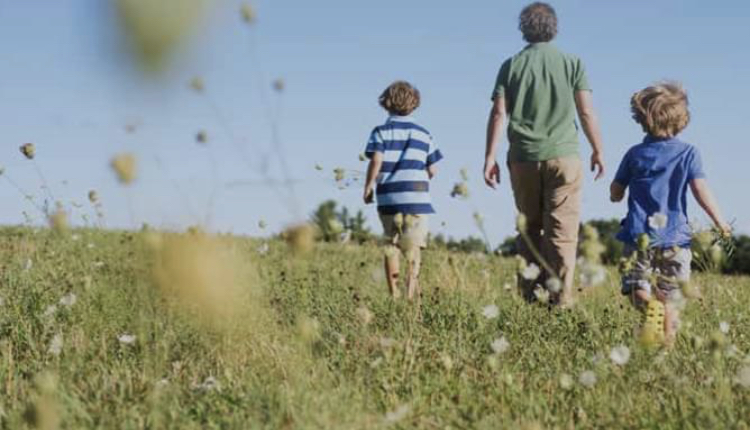
Ian is a very present, loving father who intentionally structures his work calendar around time with his sons.
Ian experienced a pivotal chapter in his career when he was hired as the executive director of the Russell Foundation, a small private family foundation in New Hampshire that had gained wealth through publishing work. The Russell Foundation was a sundown foundation, one destined to be closed once the allocated funds had been used up in support of their preferred causes, and Ian was the only staff member. Ian’s work focused on strategically bringing together capital and partners—from city and state programs to foundations and federal grants—to unite aligned stakeholders in the creative conservation of land.
Originally focused on traditional land conservation and specifically preserving watershed areas, the foundation’s scope evolved under his guidance. For Ian, conservation as a means of protecting land has never been enough. He saw that using conservation to separate people from nature was just a perpetuation of the greater separation from the natural world that he had seen do so much harm. These power-over systems that continue to favor the goals of an elite few over the betterment of all, even when nestled into seemingly well-intentioned organizations and projects, were just a green-washing of the displacement of people and communities from resources and land. It became Ian’s mission to expand the work of the Russell Foundation beyond preserving open space and habitats and toward protecting working farmland, agricultural livelihoods, oppressed communities, and community-connected land use.
Over several years, Ian grew the foundation’s geographic reach and began supporting innovative approaches to land tenure, equity, and ownership, and partnering with towns, farms, and land trusts willing to rethink how land could be held and stewarded. For Ian, this period became a living classroom, each project informing the next. This included an opportunity to preserve Frye Field, a 150-acre parcel of land surrounding the High Mowing School, where Liz works and both Dylan and Bridger attend. The land was originally owned by the Frye family for eight generations, and when it went up for sale, Ian created and implemented a capital campaign to secure the land to be owned by the school and placed into a conservation easement, providing ample access to outdoor learning experiences for the students of High Mowing.
He saw that using conservation to separate people from nature was just a perpetuation of the greater separation from the natural world that he had seen do so much harm.
A Focus on Farmland
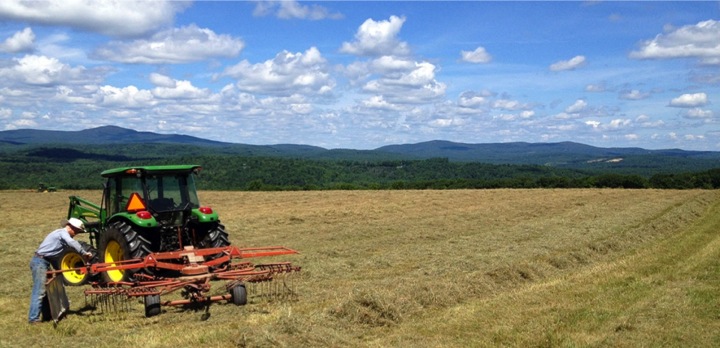
At the same time, his work with farms in transition deepened. Seeing firsthand the precarity faced by even well-established farms, including legacy and biodynamic operations, he helped explore new models that did not treat land as a commodity but instead saw the care of land as a shared responsibility. Ian’s essential work with Temple-Wilton Farm, a legacy biodynamic farm located in Abbot Hill, New Hampshire, brought the fragility of land security into sharp focus. Despite its ecological and cultural significance, the farm faced the same vulnerability shared by many working farms: uncertainty around long-term tenure.
In response, Ian helped explore new possibilities through a community-held land model that drew on the Community Supported Agriculture (CSA) tradition as a means of reconnecting people directly to land stewardship. This approach extended beyond geography, pairing mission-driven, values-based fundraising with emerging digital tools to invite broader participation and shared responsibility. Through parallel work with farm incubators and New American farming programs, Ian built strong connections with CSA farms nationwide, supporting transitions in ownership and leadership while refining a model that positions communities not as passive observers of a farm’s challenges but as essential partners in its long-term sustainability.
As these ideas took shape, Ian became increasingly involved in national conversations around farmland transition and commons-based ownership. His work contributed to the early development of the Farmland Commons model, and he was an advisor and eventually became staff at Agrarian Trust. Through his position at Agrarian Trust, Ian began transforming sketches and conceptual frameworks of commons-based structures into living, working projects, including the Central Virginia Agrarian Commons. What once required persuasion and lots of explaining began to generate its own momentum. Landowners, farmers, funders, and communities reached out, drawn by a model that championed community ownership of a valuable resource and addressed one of agriculture’s deepest challenges: secure, affordable, and equitable access to land.

Ian has supported and positively influenced several organizations that understand farmland conservation as a living system. Since 2004, he has collaborated with more than 100 land trusts, communities, and regional, state, and federal partners to support over 100 farms, protecting more than 12,000 acres while advancing commons-based ownership, long-term tenure, and ecological stewardship. Through this unique work, Ian’s sons have grown up experiencing many farms, communities, and living examples of land stewardship, offering them a perspective that both Liz and Ian feel is incredibly important for their futures and the future of their shared world.
During his career, Ian has helped raise over $25 million and managed millions in private and public grant funding. He has convinced many individuals and entities to use their own resources for the betterment of communities, land, and food systems, and has created the pathways and opportunities for them to do so. Ian has fiercely advocated for historically oppressed communities and those without access to resources and power. He has skillfully and thoughtfully entered rooms where wealth and privilege ensured a seat at the table and fought for the needs of those who would have never received an invitation. Ian has dedicated his life to being a voice for the voiceless, for the land, its beautiful ecosystems, and the humble communities that tend it with care.
When it became clear that this work needed new structure, clarity, and leadership, Ian helped carry forward the lessons, tensions, and hard-won insights into what would become The Farmers Land Trust. The organization today reflects not only years of experience, but a willingness to move through uncertainty, stress, and reinvention in service of a larger vision. Ian and Co-Executive Director Kristina Villa have taken The Farmers Land Trust from modest beginnings into a nationally recognized organization.
A True Activist
Ian’s impact is felt as much in relationships as in results. He has served on planning, zoning, conservation, and agricultural boards, delivered workshops across the country, and consistently worked at the intersection of farming, finance, governance, and community life. He has come to the aid of many organizations and missions, including the New Hampshire nonprofit Organization for Refugee and Immigrant Success (ORIS) where he helped raise funds for the purchase of the 56-acre Story Hill Farm in Dunbarton, New Hampshire. He has been the trusted advisor to many elder farmers looking to leave their land to the next generation of farmers and has been one of the few dreamers who can truly take their beautiful dreams and turn them into powerful realities.
Ian has dedicated his life to being a voice for the voiceless, for the land, its beautiful ecosystems, and the humble communities that tend it with care.
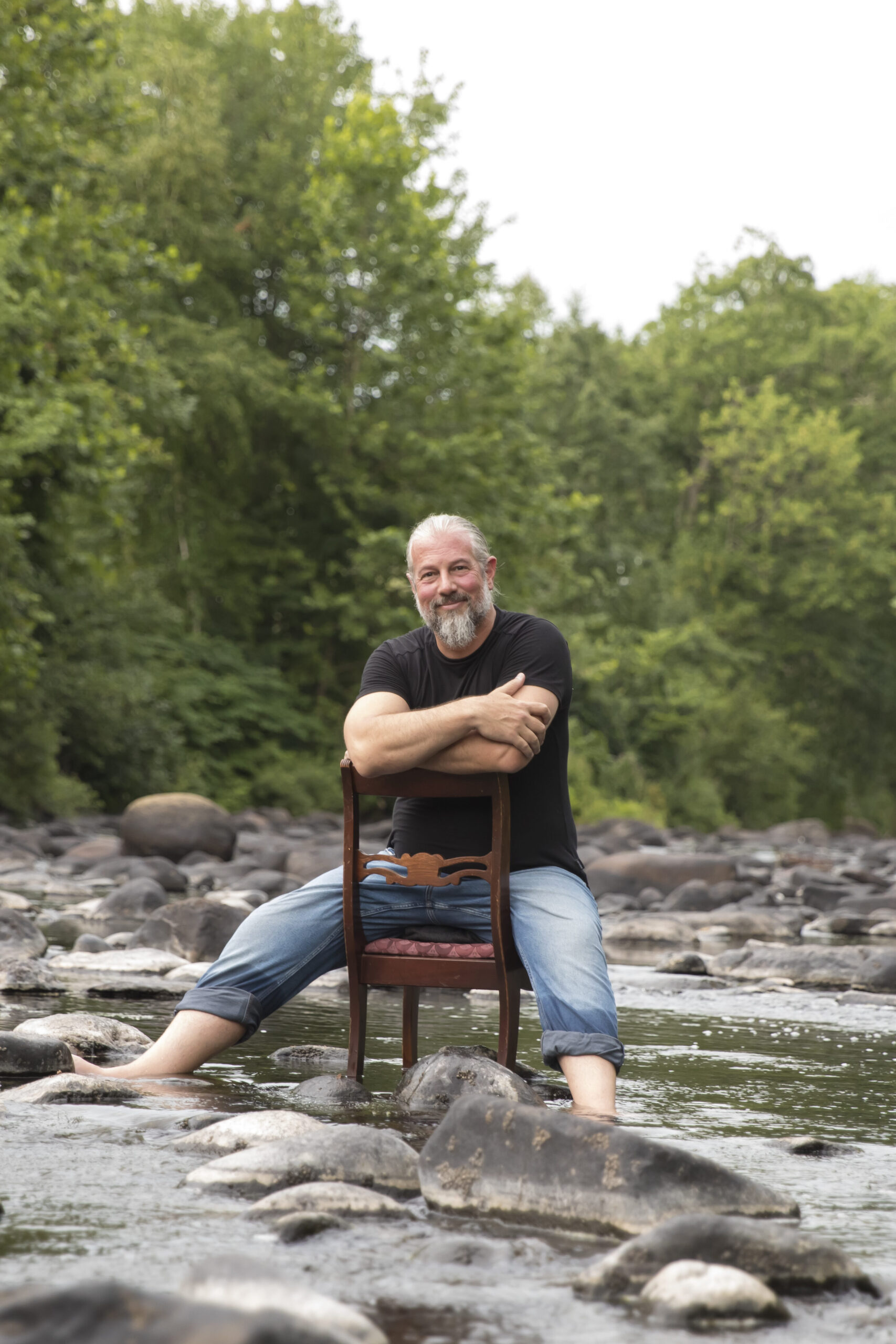
Ian comes from generations of immigrants, refugees, activists, abolitionists, and colonists, and his work reflects a deep reckoning with history and responsibility. He is committed to evolving farmland conservation toward equity, regenerative practice, and resilience, ensuring that land remains a place of nourishment for generations to come. His leadership has been recognized through honors, including New Hampshire’s “40 Under 40,” by the Food Solutions New England Network through their Leadership Institute, and selection as an Ashoka Fellow.
Because of Ian, farms have remained whole and flourished, new land has transformed into active farms, communities have been strengthened through shared stewardship, and a movement is growing that cherishes land as a living entity destined to be cared for together. His contribution is measured in acres and dollars, but also in the continuity of fields still worked, infrastructure created and repaired, and relationships built, strengthened, and tended. For many, he is the reason for the bright and shining hope that exists wildly on the horizon that promises a more equitable, food-secure, and ecologically sound future for all. On his birthday, we celebrate Ian McSweeney and the living legacy of his efforts and share deep gratitude for all of the work he has yet to do.
To celebrate Ian’s 50th birthday, there is no gift he would treasure more than support for the mission he holds so dear. Your donation today serves as a tribute to Ian’s past contributions to our world and a promise to the people and places he is destined to support in the future.