Land Returned to Harvest of All First Nations
Putting land justice into practice
Narrated by Aleeyah Frye
Written by Darby Weaver
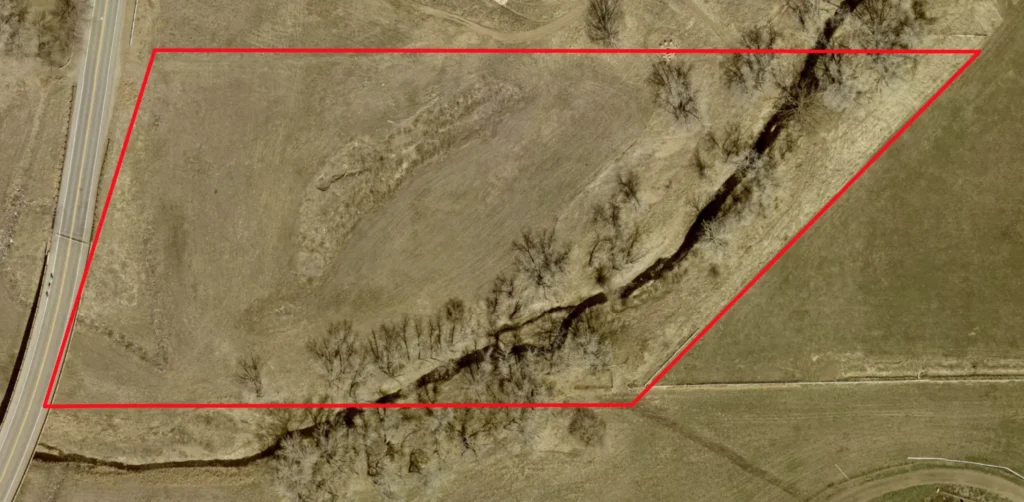
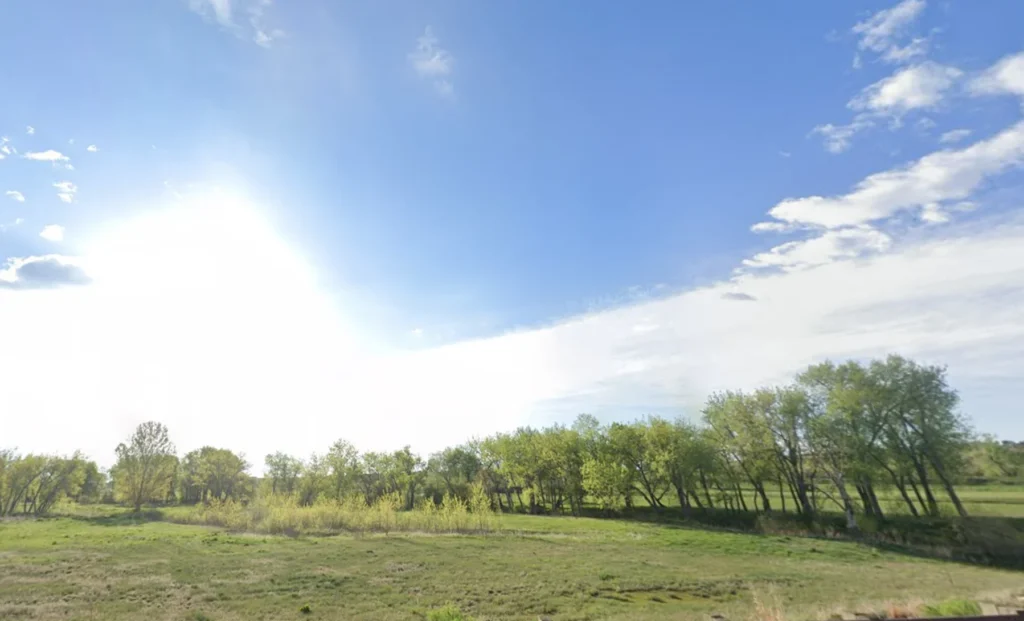
For over two years, Harvest of All First Nations (HAFN), an Indigenous and women-led organization located within the territory of the Hinóno’éí (Arapaho) people now called Boulder County, Colorado, has worked with support from The Farmers Land Trust (TFLT) to secure access to a five-acre plot. The land, located in the floodplain of the Little Thompson River, was finally awarded to the organization after a call for proposals and a lengthy regulatory selection process. This difficult path serves as a timely reminder of the systemic barriers that continue to keep Indigenous people from land ownership in the United States and the essential work that must be done by U.S. citizens to support the Land Back Movement.
Manifest Destiny
Indigenous communities are often treated as a chapter in American history, rather than as living, evolving communities shaping their present and future. Most descendants of settlers move through their days feeling absolved from the sins of their ancestors, separated by what feels like an expansive void of time. In reality, the Indigenous populations of the Americas are still here. Their ways of life have been greatly diminished, and their access to resources unfathomably limited, but their spirit and contributions to the collective beauty of Earth remain. The great robbery that displaced them from the land continues today in the very structures of privatized land ownership that began in colonial times.
As we attempt to grapple with the magnitude of such devastating violence and loss, it can be hard to know how to act and feel. And yet, to say that this tragedy happened in the past and is beyond our control today only works if you are willing to ignore the fact that 98 percent of land in the United States is now owned by the white community.
A five-acre parcel is now owned by an Indigenous and women led organization.
Harvest of All First Nations
Boulder, Colorado sprouted as a result of settling gold miners who squatted and eventually gained control of lands that had been stewarded and traversed by multiple Indigenous communities since time immemorial including the Di De’i (Apache), Hinono’eiteen (Arapaho), Tsétsėhéstȧhese (Cheyenne), Nʉmʉnʉʉ (Comanche), Caiugu (Kiowa), Čariks i Čariks (Pawnee), Sosonih (Shoshone), Oc’eti S’akowin (Sioux), and Núuchiu (Ute).Today, county leaders are working to address the lingering intergenerational trauma of violent colonization and chart a new path forward through acknowledgment and reparations.
These efforts are, of course, stifled by bureaucratic processes, hierarchy, and unresolved power dynamics. Even so, Indigenous groups in Boulder and across the country continue to gather. They are stewarding essential ancestral wisdom passed down to them and raising their voices against the inequities that continue to shape their lives. HAFN is an Indigenous led nonprofit that was formed in resistance to the festering wounds of injustice that still weep in Boulder County. Founded by current Chief Executive Director Andrea Yoloteotl Nawage, the organization’s vision is to generate systemic change by sharing traditional knowledge and empowering Indigenous communities. Andrea recounts, “I have been involved with community and environmental activism for over 23 years. I started really young when I had my first child in Mexico, where I worked with the community empowering women to learn more about how to use medicinal plants.”
Andrea, a Mexican native and holder of the Aztec fire, has been bringing people back to the land for as long as she can remember. When she moved to Boulder as an adult, she was asked to teach and speak at gatherings for numerous organizations, sharing her traditional knowledge and skills in community care. These talks prompted community members to consistently ask her for a celebratory gathering to share her invaluable wisdom more broadly. From those requests, Andrea created the Corn Festival, which drew huge crowds, raised hundreds of thousands of dollars, and mobilized significant resources for local Indigenous and BIPOC communities.
From the roots of these initial community efforts, HAFN was born, and Andrea was able to focus on the healing work of calling BIPOC communities back into relationship with the land. Andrea explains, “These programs help to bring communities of color, and specifically women of color, into practicing ancestral ways of self-care, revealing a matrilineal way of thinking over the competitive way of thinking that has been implanted by the dominant colonizer mindset.”
HAFN has since led many grassroots efforts to uplift Indigenous and BIPOC communities, creating programming centered on cultural education, environmental awareness and stewardship, ancestral wisdom for women (including postpartum care), and food justice and sovereignty. While they have been very successful at bringing Indigenous and BIPOC people into community, it has also required a lot of outreach and education to non-Indigenous locals. Andrea notes, “The current system has taught the non-BIPOC folks that if they are interested in something, they can take it over. We had to do a lot of solidarity and anti-racism training, teaching them to learn that we do want their support, but that they need to be educated in allyship. We didn’t want them to come and try to appropriate and take over events and programming.”
Reparations as a Verb
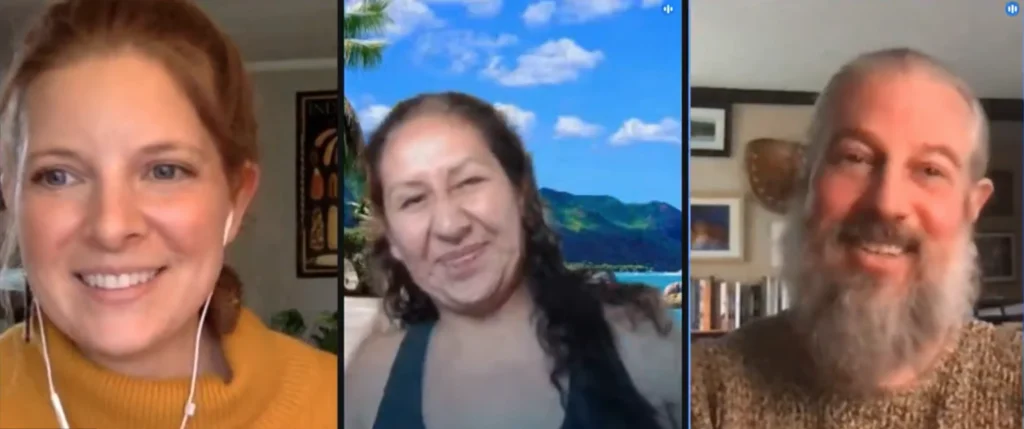
Farm, land, and social change conferences often spark serendipitous, transformative connections for TFLT Co-Executive Directors Kristina Villa and Ian McSweeney. One such fateful meeting happened at the 2023 Biodynamic Association’s annual conference in Denver, where they were fortunate enough to meet Andrea. From there, a deep connection was formed between TFLT and HAFN. While Andrea and the HAFN community were not necessarily interested in pursuing the Farmland Commons model, TFLT began helping the organization explore grant opportunities and facilitate communications with Boulder County about finding a piece of land for the organization’s programming and events. After several months, HAFN was presented with an opportunity that they felt Ian and Kristina were uniquely suited to help them navigate.
True reparations are only possible when Indigenous and BIPOC communities are incorporated into the very formation and guiding structures of our legal and social frameworks.
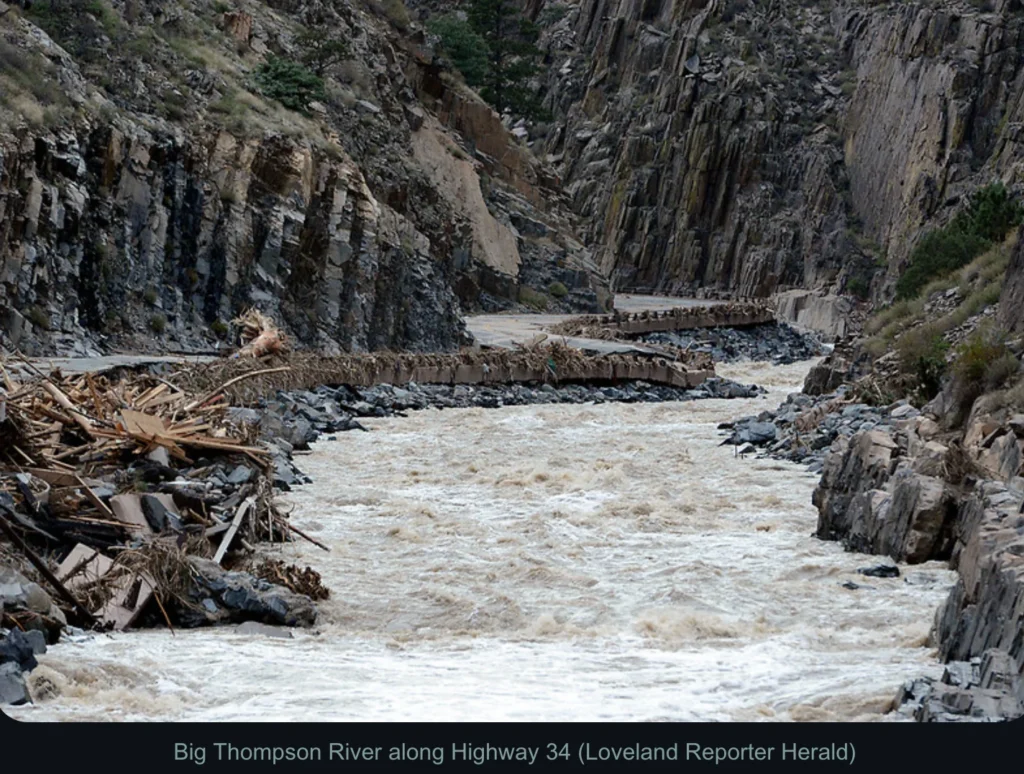
When comparing city and state governments throughout the United States, Boulder County is considered progressive in their governance, especially when it comes to collaborating with local nonprofits surrounding resources and land. Today, the government of Boulder owns approximately 25,000 acres of agricultural land and leases it to organizations for farming and community use. After an unprecedented 2013 flood claimed the homes of many residents along the Little Thompson River, the county looked for a path forward that served the highest good. A federal buyout allowed officials to purchase the damaged properties and permanently bar future residential development. Seeing new potential for the floodplain, the county issued a Request for Proposals inviting community organizations to apply for ownership of a parcel.
Andrea asked Kristina and Ian if they would help HAFN evaluate the available parcels and submit multiple proposals. While this work falls outside of the Farmland Commons work, TFLT’s core values of making resources and information open source for all to use brought them in. TFLT recognizes that when it comes to communities historically excluded from land ownership and the knowledge that comes with it, simply making resources available is not enough; meaningful access requires a deeper level of support, guidance, and engagement.
As a land trust that is uniquely sensitive to the inequities of historic and present-day land ownership, Ian and Kristina were honored to do what they could to assist HAFN in securing a small fraction of what is owed to Indigenous communities in North America. They see clearly how land ownership creates and sustains a protected class. Public funds are gathered, and federal buyouts are negotiated when disasters strike. Institutionalized mechanisms trigger the mobilization of many resources for landowners who suffer losses, and yet so many of those same people remain in opposition to even the most modest attempts at reparations to the land’s original owners.
A Little Land Back
In the case of the Little Thompson River, the beauty had attracted wealthy homebuyers over the years, and the value of the land appreciated considerably. Like so many other stunning natural landscapes that have been gentrified by wealthy nature enthusiasts across the country, the events of climate change have shown that no place is truly safe from disaster and loss. Places that were once viewed as the climate refuges of our future are now being revealed to be just as susceptible to climatic destruction. When the Little Thompson River flooded, the land went from being prime real estate to a managed floodplain. The reason the land became available to groups like HAFN at all was because the county felt it no longer held commercial or developmental value.
Ian and Kristina recognized that HAFN’s land acquisition represented an enormous opportunity. With this one step forward, they would have the chance to build equity, establish economic power, and create a pathway toward accessing more land in the future. They attended meetings with both HAFN and the Boulder County Commissioners, dedicating themselves to walking members through the complexities of land acquisition and ownership. They also made themselves available as a sounding board for Andrea and the HAFN community’s thoughts and concerns, translating them into written documents digestible by an elitist bureaucratic system. Andrea recounts, “It took a little bit of time for us to actually make the decision to get this land. The Farmers Land Trust helped us to understand all of the paperwork, all of the legalities of it, how the proposed restrictions would impact us, and what we really needed to do in order to make it work. I could not have done that without Ian and Kristina, at all. I don’t have that capacity, the knowledge, nor the know-how to establish the right boundaries with the government. Thankfully, they were able to bring us in, participate with us in meetings, and provide legal clarifications.”
“Kristina and Ian helped me to understand and to dismantle the system for our benefit. I never saw that they had other interests beyond really assisting us themselves.”
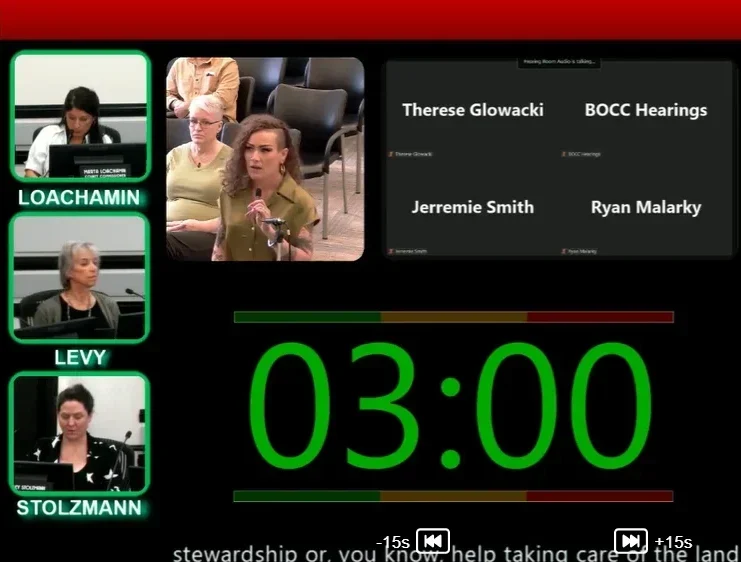
During the selection process, HAFN was asked to attend a hearing where the local community surrounding the parcel was invited to share their thoughts about the organization taking over the land. Kristina attended the meeting virtually and was appalled at the openly racist claims surrounding property taxes and concerns over neighborhood safety. One of the commenters opposing the land transfer was also a direct neighbor of the property in question.
After submitting proposals for four different parcels, Boulder County awarded a five-acre parcel to Harvest of All First Nations. Then the county’s final paperwork differed from all previously sent materials. It introduced more restrictions on how the land could be used and specified additional county rights and responsibilities. This further limited HAFN’s dreams of using the land as a gathering space. It practically eliminated their chances of building a community sweat lodge, raising hogs, and cultivating food for their communities. The land itself has limited access, and the neighbors have made it very clear that their presence on the land will be a disturbance to their lives. Andrea notes, “This situation is the kind of thing we frequently see from the government. Yes, they say they want to create reparations, they want to create equity, but they are not really actively doing it.”
Kristina and Ian continued supporting HAFN through the time-sensitive real estate transaction, ensuring that the community was able to receive what had been promised. What should have been experienced as good news fell somewhat flat onHAFN members. Because their communities had suffered so much at the hands of the colonizing culture, they weren’t sure if the risk would be worth the reward. They were nervous about being exposed to unexpected costs or obligations and weren’t sure if the location was a safe space for their membership to gather.
The Supremacy of Paper
A five-acre parcel is now owned by an Indigenous and women led organization. Due to HAFN members feeling unsafe to use the property as they had hoped, they are currently leasing the parcel to a local neighbor for income. They are collecting rent payments from someone who openly opposed the land transfer. This win within the greater Land Back Movement is proof that these things can be done. Citizens around the country can choose to support their local Indigenous populations in their pursuits of equity within societal frameworks that were designed to keep them out. The difficult reality is that such efforts are hard-won and demand perseverance, and true advocacy and support require more than resources and knowledge; they require action Throughout the process, Ian and Kristina were struck by the harrowing realities faced by modern-day Indigenous communities. They witnessed firsthand the fear felt by the HAFN community members regarding working with the government. HAFN leadership even reached out to TFLT to make sure documents reflected true information. Kristina and Ian saw historic pains relived in every meeting as the group wrestled with whether to move forward with the project or not. It became ever more clear that true reparations aren’t just the return of land, resources, or money. True reparations are only possible when Indigenous and BIPOC communities are incorporated into the very formation and guiding structures of our legal and social frameworks. It requires bringing their perspectives into governance and decision-making, and reshaping our shared policies to be inclusive rather than inherently exclusionary.
As an example, our systems of private property accumulate an absurd amount of complex documentation. The five-acre parcel given to HAFN had been privately owned and was bought through federal intervention, which incurred extensive restrictions and management requirements. TFLT estimated that over 100 pieces of paper were created to facilitate the transfer of ownership. While many of the measures listed in the documentation had protective intentions to avoid future losses from flooding, it exemplifies how the great land theft against Indigenous cultures was originally perpetrated and how it continues today. Such paperwork can be manageable for classes of people familiar with land ownership and legal frameworks, but creates major barriers for people without legal, title, or real estate transaction experience.
While HAFN remained suspicious of the Boulder governance’s intentions, they put their trust in TFLT. Andrea explains, “Kristina and Ian helped me to understand and to dismantle the system for our benefit. I never saw that they had other interests beyond really assisting us themselves. They didn’t have an agenda, they didn’t try to tokenize us, and they were always hearing us and taking the time and effort to support us. They were there for us with any question, big or small, and they never diminished us in any manner. And it feels like at The Farmers Land Trust there’s a really high awareness of why ‘Land Back’ is so important.”
Being an Ally
What HAFN sought in this process was safe, long-term access to ancestral lands. They wanted to reconnect to the nourishing, natural world without the dangers associated with racist neighbors, ICE agents, or deliberately confusing treaties. The unfortunate reality is that those places scarcely exist. So long as control of the land is routed through private ownership, stolen land will continue to be passed down from one generation to the next, while generations of Indigenous communities will remain displaced and landless. That is, unless the citizens and landowners of the United States are called to be the change they seek.
This land transfer was proof that actions taken by the privileged classes can make a huge impact for those who have been systemically oppressed. If more people chose to advocate for Indigenous and BIPOC communities, more small wins could start building into a greater whole. If you are feeling called to support the Indigenous communities in your area, Andrea suggests starting with learning your region’s true history. Andrea affirms, “Get educated first. Learn about the land that you are standing on. Try to make relations with Indigenous people without being invasive. Connect with the communities and offer your services without expecting to be recognized for it. Let the community take the leadership of whatever project is meant to help them and trust in what they are telling you. Use your power to influence others. Reach out to the people that will potentially believe more in the project because of your appearance and background.”
In truth, Andrea’s experience working with organizations that make claims about wanting to support reparations work has been mixed. Andrea explains, “Some groups will recognize gatekeeping and the problem with speaking on behalf of these communities instead of letting them speak, and some will not. Sometimes an ally is trying to create resolution for something and has good intentions, but sometimes good intentions can cause harm, especially if you are not in alignment with the people.” For these reasons, it is essential to move slowly, seek guidance from the community itself, and never assume that your own ideas about how you think something should be represent the true needs of the people.
As many gather this week in thanks for the abundance of this beautiful landscape that we are so lucky to derive sustenance from and for the people we love most, we encourage you to spend some time considering how you can use your personal skills and privilege to uplift the Indigenous cultures of your region.
As a place to start, TFLT pays a voluntary land tax to Indigenous communities for all land held by TFLT or a Farmland Commons, and you should too.