A Letter to Us, and a Story We Hear Too Often

May 21, 2025

A Case for Regenerative Agriculture

June 16, 2025

The Role of Agricultural Subsidies in Transforming the U.S. Food System

By Sophia McLoughlin
A senior thesis submitted for the degree of Bachelor of Arts in Environmental Studies

EXCERPT

6.4 Parity for Community Land Trusts

The following policy recommendation is grounded in conversations with Ian McSweeney, Co-Founder and Co-Executive Director of the Farmers Land Trust, whose work focuses on transforming land tenure systems to better serve ecological stewardship and community resilience.

An ideal future Farm Bill must take bold steps to ensure that the transition of farmland over the coming decades is both equitable and ecologically responsible. As the U.S. faces mounting climate instability, market disruptions, and the aging of its farming population, over 30% of farmland is expected to change hands in the next 15 years (American Farmland Trust, 2025). This presents a rare and urgent opportunity to redirect land ownership away from extractive corporate models and toward systems that prioritize long-term land stewardship, equitable access, and community benefit. Community Land Trusts (CLTs) and Farmland Commons models offer a transformative alternative to conventional land acquisition and management, particularly for historically marginalized communities that have been systematically excluded from land ownership.

Currently, the Agricultural Land Easement (ALE) program under the Farm Bill’s Agricultural Conservation Easement Program (ACEP) provides $450 million annually to support land conservation through conservation easements. However, these funds are only available to traditional conservation land trusts—entities that, while successful at preserving natural spaces, often fall short when it comes to promoting equitable land access, addressing the dispossession of Indigenous communities, or embedding social and environmental justice into their land stewardship frameworks. Conservation easements frequently maintain inequitable ownership patterns and can even incentivize short-sighted land management.

By contrast, CLTs and Farmland Commons models integrate equitable land access, sustainable stewardship, and community ownership directly into their structure. These models do not merely conserve land—they ensure it is used to grow food, provide livelihoods, and sustain communities in ways that are both socially and ecologically beneficial. A future Farm Bill should reflect this potential by expanding ACEP eligibility to include CLTs and Commons Land Trusts as qualified entities, and by broadening the definition of “qualified real estate interest” to allow for fee-title ownership by these organizations. This would allow federal funds to support innovative lease and tenure models that align with long-term stewardship goals. 

Importantly, this expansion must also be accompanied by a significant increase in funding. ACEP currently meets only a fraction of the national demand for agricultural land protection. Doubling the program’s budget would not only provide parity for CLTs and Commons models but also strengthen the overall impact of federal conservation efforts. A forward-looking Farm Bill should seize this moment to democratize land ownership, ensure that public dollars support both conservation and community, and protect the future of American agriculture for generations to come.

Click here to continue reading

When you purchase an item from our shop, all profit goes towards helping us to fulfill our mission.

Thank you for supporting this work.

The Farmers Land Trust receives 15% of all purchases made by customers who enter their website from here!

Download this document

Enter your information once to access this document and the complete Financials & Reports library.

Name(Required)
Subscribe to news and updates?
This field is hidden when viewing the form

You will not need to submit this form again on this device.

People

Community stakeholders and prospective board members who:

    • Include exiting and/or entering farmers
    • Include an in-state attorney
    • Willing to donate and/or provide discounted service to board and/or serve
  • Include community partners that may include representation from:
    • Land trusts
    • Food and/or Farm support organizations
  • Include at least five people committed to serving on volunteer board
  • Demonstrate willingness, skills, experience, and networks in legal, fundraising, communications, real estate transfer, agriculture, and farm viability/support

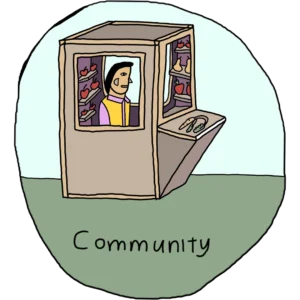
Community

Geographic location that is in a regional foodshed/farm to market based size and has:

  • Demonstrated need for improved farmland access and secure tenure
  • Opportunities for preserving legacy biodynamic, organic, and regenerative farms, for manifesting BIPOC land justice, and/or for community based regenerative food production based agricultural practices

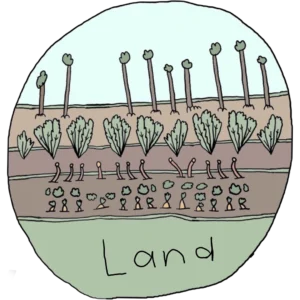
Land

Viable Farmland Project must include:

  • Farmland and infrastructure to support “agrarian enterprises” (including, but not limited to diversified production of food, forage, fiber, medicine, and ecological stewardship)
  • Soils sufficient to support agricultural uses
  • Secure, sufficient quantity and quality water to support agricultural use
  • No existence or evidence of overly contaminated soil or water, or have the ability and capacity to remedy
  • Location and scale sufficient to support production that can provide economic enterprise viability and have community benefit
  • Housing and farm infrastructure onsite, possibility of developing housing and farm infrastructure onsite, or opportunity to legally tie housing and farm infrastructure to property
  • A landowner who demonstrates alignment and willingness to:
    • Enter into a Full Donation or Discounted Purchase Option agreement:
    • Within 8 months of initial conversations
    • That allows a minimum of 12 months but up to 24 months to closing
    • Collaborate to engage existing farm community to raise awareness and funding support

The Founder

Julian Lauzzana

Julian Lauzzana is the founder of Earthen Heart and a community homesteader, land steward, and visionary advocate for regenerative rural living. Drawing from a diverse background in culinary arts, organizational development, media production, farm-to-school research, and intentional community design, Julian has spent decades exploring how people can live in deeper relationship with each other and the land. He generously donated the founding 19.9-acre Bangor farm and helped establish the Earthen Heart Farmland Commons to create lasting opportunities for community-based food production, land stewardship, and affordable access to farmland. Through his work, Julian seeks to cultivate resilient local economies, strengthen rural communities, and demonstrate replicable models of shared land ownership and regenerative living.

Read more about Julian's story →

The Steward

Julian Lauzzana

Alita is a farmer and leader connected to the Earthen Heart story, and a board member and leader of the West Michigan Young Farmers chapter. She now holds a 99-year lease on the land Julian donated, a long-term, community-rooted foundation for her work as a steward and grower.

Visit West Michigan Young Farmers →

Our online auction is LIVE! Browse the selection now to find super useful services, great products, unique experiences, and more! Your winning bid will help protect farmland and empower the next generation of farmers by supporting the acquisition of Blue Rock Station Farm into the Blue Rock Farmland Commons.