What The Farmers Land Trust Does – Installment 1: Creating The Farmers Land Trust
Narrated by Aleeyah Frye
Written by Darby Weaver
This Is How We Do It
As we celebrate the first year of the Farmland Commons model transforming our collective relationship to land and ownership, we thought it would be helpful to let people in on how The Farmers Land Trust (TFLT) actually does what it does. We’ve had so many people reach out to us interested in this work, in collaborative ownership models, and eager to find new ways to connect communities with the lands that support them. We created this series to highlight the work our team and collaborators do to bring Farmland Commons projects to life. We feel like this will help do two things:
1. It will reveal just how complex and dynamic this work really is. We want to highlight the different steps, processes, documents, and skills this work requires. Through our team and collaborators, we will explore the unique expertise and specialties brought together to create and maintain the Farmland Commons.
2. It will inspire more people to get involved. Once you can see how these things actually work, all of the different elements that must come together to permanently hold a piece of land for regenerative agriculture within a community dedicated to its care, you may be inspired to explore where your own expertise and personal magic can benefit the process.
At this point on humanity’s path, it appears that we collectively know, on at least some level, societal systems that currently dominate our world are, at best, designed to prop up powerful people, interests, and entities over all others, and at worst, are entirely toxic and need to be replaced. To create something as innovative as the Farmland Commons within these systems takes a lot of expertise, knowledge, tenacity, and maneuvering. We are excited to share with you, in digestible bites, what that looks like through the lens of the roles people fill on our team. Even though the work requires significant effort, we want to emphasize that not only is this work possible, it is also already happening today!
To start, we will highlight Co-Executive Directors Kristina Villa and Ian McSweeney and the formation of TFLT. Through their original vision and tireless dedication, TFLT has moved from concept into action, becoming a living expression of service to the land and people.
Kristina Villa
Kristina Villa runs a small farm with her husband, Anthony, and son, Arlo, in Middle Tennessee. They grow an array of vegetables, annual fruit, and flowers using organic and biodynamic growing methods. They also raise meat chickens, cattle for beef, and a herd of dairy cows whose milk is offered to the local community. Even with over a decade of experience and skill-building in the art and business of farming, the majority of the land they use for cultivation and grazing is borrowed. Kristina continues to experience firsthand both the barriers facing young farmers eager to feed their communities and the challenges confronting retiring farmers during land transition.
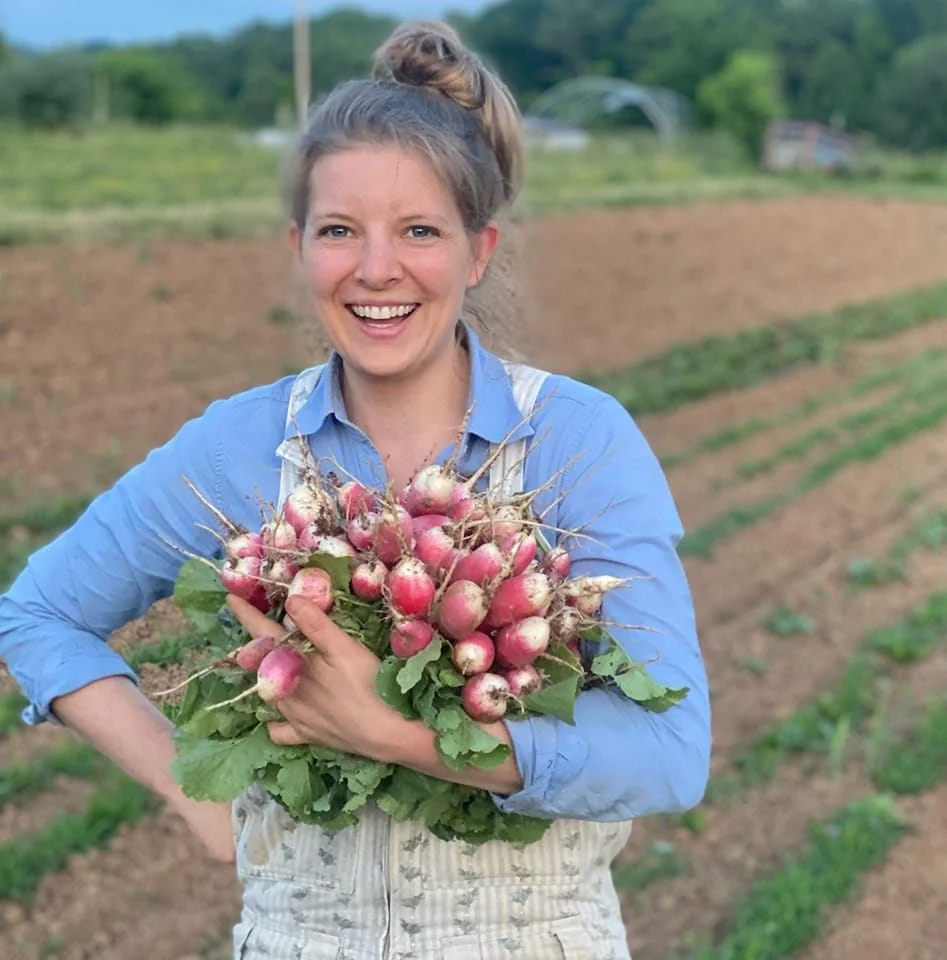
Before her journey into agriculture, Kristina grew up in a food-insecure home. Her family’s struggle with access to food left its mark, and she spent her young adulthood volunteering at food banks and soup kitchens seeking an understanding of the problem at its roots. Kristina realized from her own experience, and from the insight gleaned from her volunteering, that food access was an issue that created a cyclical perpetuation of poverty. She felt that if society could solve the food access issue, people would be empowered to lift themselves into higher planes of existence.
Kristina graduated college with a degree in communications and media studies from Kennesaw State University. Feeling disheartened by the corporate takeover of our food system and the amount of costly, fake food in grocery stores, Kristina started a small garden. She was overwhelmed by the bounty even a small garden could produce and realized that food access could be alleviated if more people were growing food and sharing it with their communities.
She felt that if society could solve the food access issue, people would be empowered to lift themselves into higher planes of existence.
Kristina moved to the historic Long Hungry Creek Farm to learn as much as she could about farming, feeding people, and living in harmony with the land. She spent eight years managing the farm, milking cows, coordinating CSAs and other sales outlets, marketing, and writing grants, all while simultaneously learning to eat in community within the means of the land. She learned the skills necessary to preserve the harvest for the winter months, and the experience revealed that land access and people’s direct connection to the food system are essential pieces of a truly thriving, resilient community. That’s when Kristina had her real awakening to the root of the country’s ongoing issues with food insecurity: in order to consistently grow wholesome food, people need access to land.
Ian McSweeney
Ian grew up in Halifax, Massachusetts, in a family that instilled a deep appreciation for our human connection to land. His mother, a midwife, and father, a carpenter, Ian was surrounded by elders who emphasized the importance of community care, crafts, and trades. He apprenticed with his father on historic restoration projects and developed a sense of value for the preservation of well-made and designed homes and community spaces. Though Ian’s family was open-minded and encouraged acceptance and exploration over judgment or fear, he still grew up in a part of Massachusetts that celebrates its colonial past, and Ian never felt truly connected to that cultural aspect of his hometown.
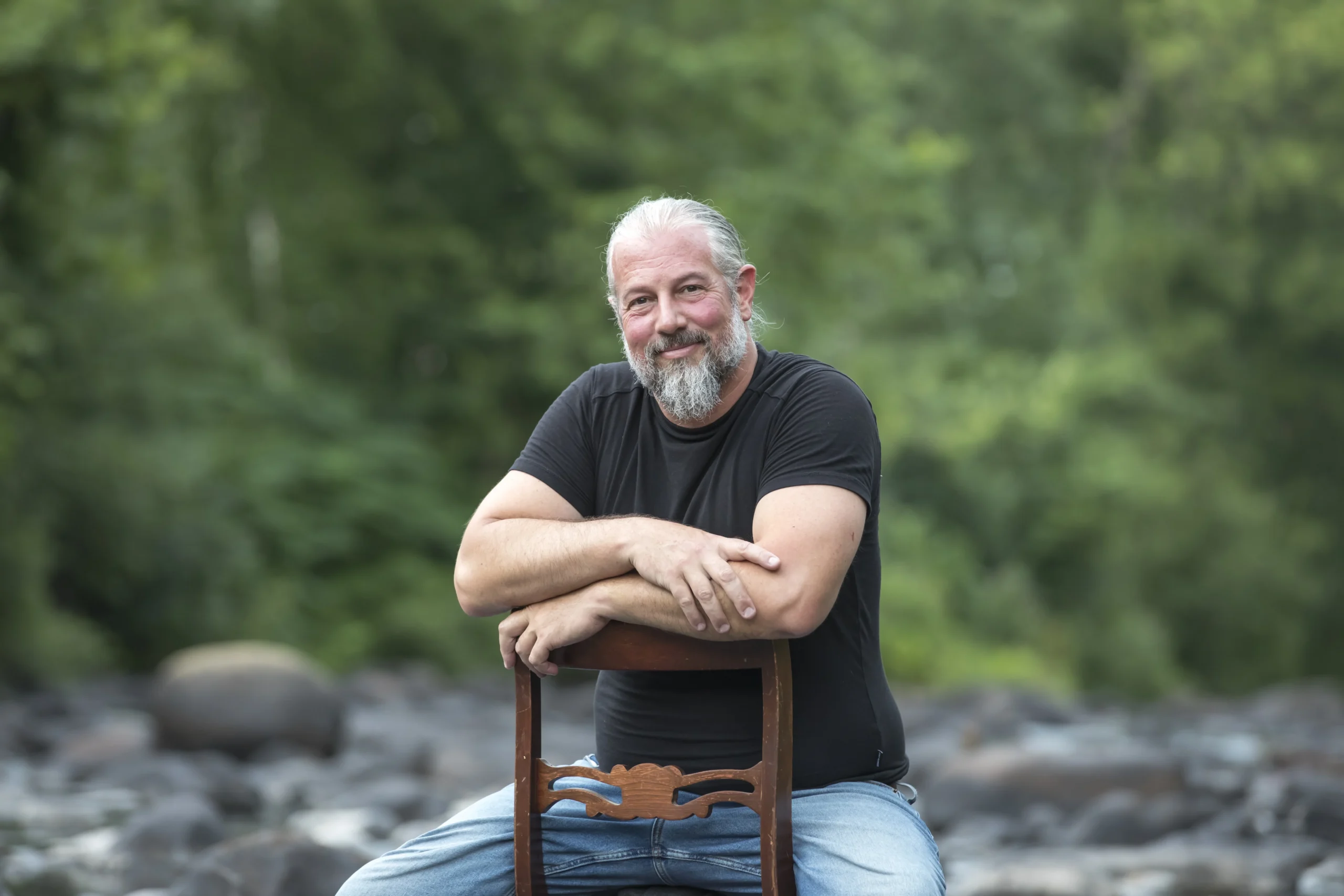
Ian moved to New Hampshire to attend New England College and broaden his horizons, studying psychology and communications. Upon graduation, Ian worked as a social worker with a focus on outdoor, experience-based education and nature immersion. While his work was very rewarding, he recognized how inaccessible his services were to working-class people, and his disillusionment with the systems at play sent him into what would be his real work.
Ian and his future wife, Liz, moved to Bozeman, Montana, where he took a sales position at the private Yellowstone Club, selling ski lessons to wealthy customers. He recognized that real estate was one of the major pinch points that separated people and land in the United States. He and Liz moved back to New Hampshire, where they married and had two sons, Dylan and Bridger. At this time, Ian started a brokerage and consulting business that brought together development, conservation, and agriculture at the neighborhood scale. Ian’s future career took shape when he became executive director of the Russell Foundation, a small family foundation in New Hampshire.
Originally focused on traditional land conservation and watershed protection, the foundation’s work evolved under Ian’s guidance as he questioned the limitations of conservation models that separated people from the land. He expanded the foundation’s scope to include working farmland, agricultural livelihoods, oppressed communities, and community-connected land use. This expanded the foundation’s focus from an 11-town watershed to a statewide scope, with select projects across the country. During this time, Ian explored innovative approaches to land tenure, equity, and ownership. His work ranged from working with schools, including securing the 150-acre Frye Field for High Mowing School, to working with farms facing transitions in ownership and leadership.
Ian helped develop approaches that positioned communities as active partners in the long-term stewardship, ownership, equity, and tenure of farms.
His work with Temple-Wilton Farm and other CSA farms, farm incubators, and New America farming programs further shaped his vision of community-held land. Drawing on the traditions of community-supported agriculture, values-based fundraising, and emerging digital tools, Ian helped develop approaches that positioned communities as active partners in the long-term stewardship, ownership, equity, and tenure of farms. These ideas eventually connected him to national conversations around farmland transition and Commons-based ownership, contributing to the early development of the Farmland Commons model. As an advisor and then staff member at Agrarian Trust, Ian co-created the Commons model and helped turn those concepts into living projects, including the Central Virginia Agrarian Commons.
Co-Executive Directors
While leading the Russell Foundation, Ian felt an increasing drive to protect working regenerative farms across the country. This led to an invitation to Long Hungry Creek Farm in Red Boiling Springs, Tennessee, a historic biodynamic CSA farm owned by farmer and author Jeff Poppen. Upon arrival, he opened the barn door and met Kristina.
Ian later returned to the farm on behalf of Agrarian Trust in the hopes of bringing the farm into the Commons model with Kristina and her husband as the next generation stewards of the land. During this visit, Ian and Kristina engaged in deep conversations about the work of the Commons. Kristina couldn’t see how what Ian was trying to do was possible given all the obstacles she already faced managing the farm of an elder currently facing transition. Ian understood how difficult it all seemed and had years of experience doing this exact thing. He was impressed by Kristina’s dedication, skills, and perspectives. Ian recounts, “Kristina was doing so much. I was struck by that. Kristina came on as a next-generation farmer, and the farm didn’t even have books before Kristina created them. She was also running for county commissioner. She was involved in the Tennessee Food Summit. She was engraining and connecting the farm in so many ways, and it still wasn’t working.”
…if farmland was to be saved, new models must be made
Kristina protested that the ask was too great, that the human dynamics and logistics of transitioning working farms into community-held farmland from one generation to the next were too daunting. Ian agreed with her of course; he knew how formidable the challenges and obstacles were, but he also affirmed that if farmland was to be saved, new models must be made, and he had direct experience creating them. Kristina remembers, “It was such a profound moment. It was so simple. I realized I had to break out of what I thought was normal and be open to something different. This had never occurred to me; that if I wanted things to change, I personally had to change how I was thinking about it.”
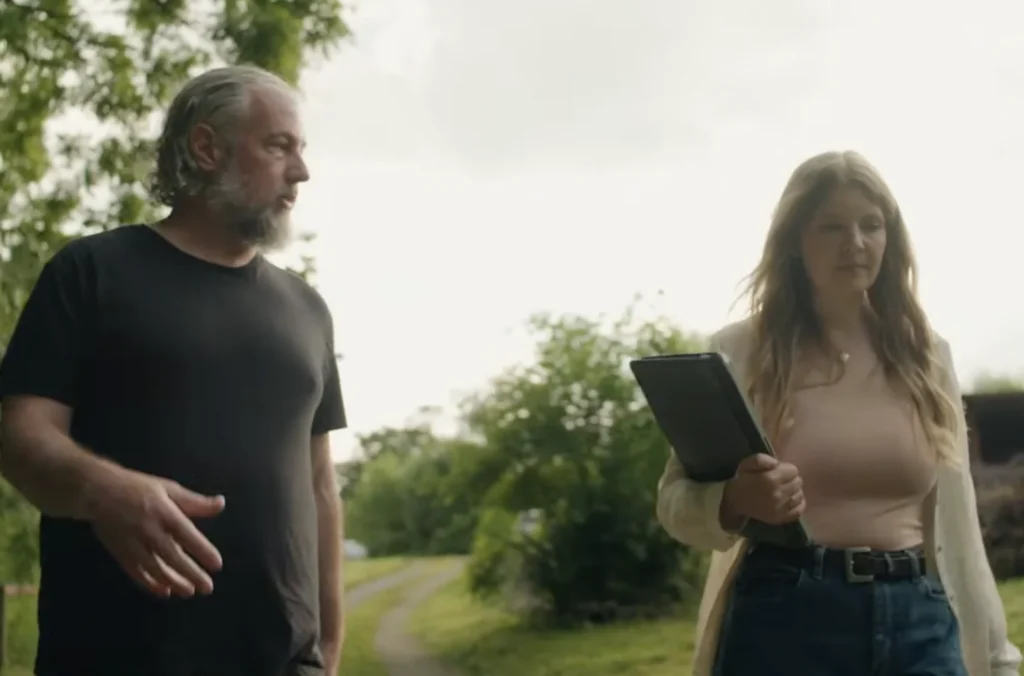
Ian’s words lingered in Kristina’s mind, and she decided to get involved. Kristina was invited to join the team at Agrarian Trust, and she made herself invaluable quickly. As Ian and Kristina worked together, they sensed a growing momentum and connection. A synergistic and adaptive workflow arose that showed real potential for projects to not only be identified and discussed, but to be executed. Kristina brought real-world farming experience, communications expertise, and grant-writing know-how, paired with the insatiable drive of a career farmer who sees an insurmountable obstacle and crafts the strategy to move past it. Ian brought years of real estate and relationship management experience, deep knowledge of wealth stewardship, and fluency in the language of funders and foundations. Behind him was a living resume of community partnerships, successful fundraising, and farmland already protected under community ownership.
Both Ian and Kristina were identified by their respective communities as people who do what they say they’re going to do. Both were motivated to create and run an organization that went beyond webinars and conversations and instead built pathways for actual farmland to be removed from the speculative real estate market and made available to communities in perpetuity.
Through their original vision and tireless dedication, TFLT has moved from concept into action, becoming a living expression of service to the land and people.
They came together and distilled all the lessons they learned individually and those they shared during their tenure at Agrarian Trust. They made the leap of faith and bet on themselves. They chose to meet as equals, sharing the title of co-founders and co-executive directors. Kristina explains, “I think it comes down to the way Ian and I communicate. We both respect and appreciate each other so much, and when differences of opinion arise, we consider and support one another’s unique viewpoint. The co-director positions make us partners, and it means we are never siloed with our own ideas; it’s a conversation.”
Many Hands Make Light Work
The creation of TFLT was also supported by countless others. Where most funders require proof of at least 12 months of operations before they choose to provide resources to an organization, the Kalliopeia Foundation, a long-time funder and believer in Ian and Kristina’s work, gave TFLT $50,000 to get started. Through their shared connections, individuals and organizations offered support for the fledgling opportunity because they believed that Kristina and Ian could do it. This included world-renowned law firm Kirkland and Ellis, which offered pro bono legal counsel and helped TFLT submit its 1023 to gain IRS status as a 501(c)(3) national land trust. Author, designer, and entrepreneur Charity May, who saw Ian and Kristina give a presentation, reached out to see how she could support them. She then helped create the charter for the organization and serves on the board today.
Attorney Anastasia Maier, founder and director of Land Clinic, had previously worked with Ian and Kristina, and she helped create all the open-source Farmland Commons template documents featured on the TFLT website. Kristina affirms, “We wanted to create the Farmland Commons in such a way that everybody could do it. We wanted to make the materials and give everyone access to them. What if instead of us having to create each Commons, we existed to create them ourselves AND to help others create their own?” Ian’s status as an Ashoka Fellow gave them access to the resources and wisdom offered through the Ashoka Fellowship community as they navigated their difficult transition from one organization into the formation of another.
Ian and Kristina were identified by their respective communities as people who do what they say they’re going to do.
Knowing just how crucial it is to create and sustain a high-functioning, respectable, and mission-aligned board, they began a rigorous onboarding process. It was essential that the board represent a diverse collection of individuals with a wide array of skills. Ian elaborates, “We knew we had a lot of experience, but we were also very aware of what we were lacking, and we knew what we needed to seek out on the board.” They secured both those who engaged with the land directly as well as those who engaged with real estate and property law. They wanted members to represent different classes, different races, gender identities, and geographies, and bring into view the diverse perspectives that engage in land protection and stewardship throughout different regions in the United States.
The board is important to Ian and Kristina because it is such a foundational piece of any organization. They needed that foundation to speak the truth at the heart of TFLT, which is that community models like the Farmland Commons are only truly successful when justice and equity are woven into every part of their formation.
The Work
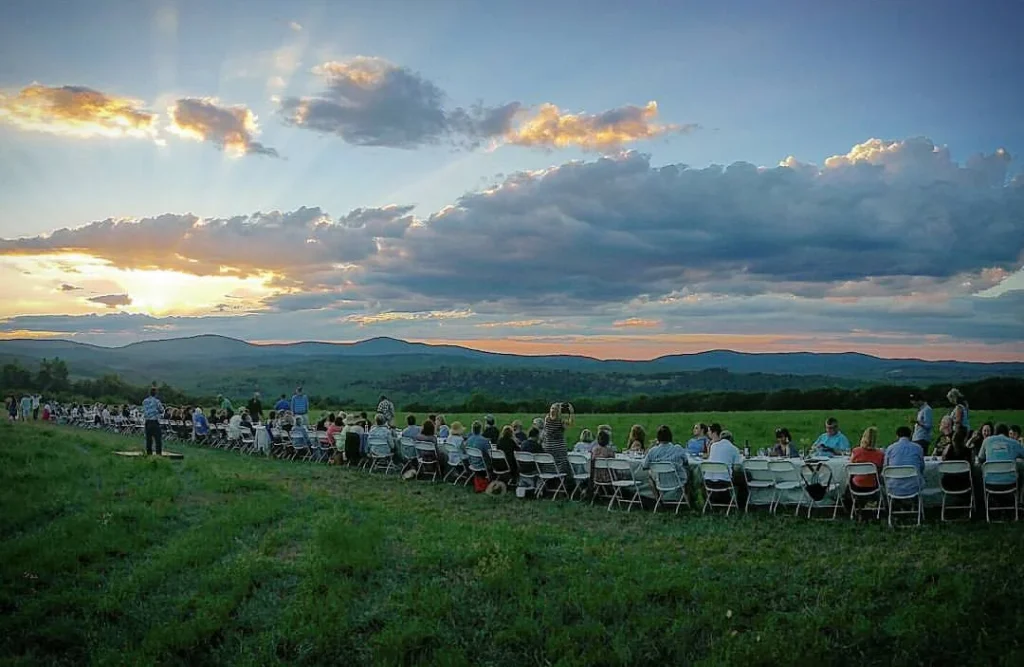
There have been so many steps to get to where TFLT is today. Starting from two people with a vision for the land and a willingness to step into the unknown and do really hard work together, it has evolved into a productive and impactful entity. Kristina and Ian have had to make choices, be strategic, and engage with real people in beautiful, difficult, and profound ways to gain momentum for their mission. Ian reflects, “I am always in my mind thinking about investment, outcome, and strategy. That is something that Kristina and I connected on early. For so many people who work for nonprofits and believe in the mission, it can be very hard to use the mission to get specific and dial in on the actionable and tangible. There are so many in need; it can be hard to narrow your focus. The reality of being a small organization is that you can only do so much. You have to ask yourself, ‘What are the projects that are going to make the biggest impact, send the most ripples out into the world, and build more momentum for the work?’”
As a nationally active, fully remote organization, TFLT has been able to navigate our new online reality, staying nimble and developing tools, sharing resources, and holding space for connection on multiple platforms. They have hired a small team as well as continued to work with an ever-growing list of inspiring people. The real-world impacts already made can be explored fully in the progress report: Our First Three Years.
…community models like the Farmland Commons are only truly successful when justice and equity are woven into every part of their formation.
This piece barely scratches the surface of all the work and individuals that make TFLT possible. As this series continues, we will return to Ian and Kristina to explore what a co-executive director of a farmland trust actually does, as well as meet the staff and extended collaborators of TFLT who bring their own special magic to the team. Kristina affirms, “The ability to be on a team is crucial, and I feel very strongly about what people can do together. We don’t all have to do everything; we can delegate and divide up responsibilities. There are so many aspects of our work that are successful because of how our life experiences play off one another. I’ve always seen things as being the most powerful when people come together Avengers style. When everyone brings their strengths together, so much more can be accomplished.”
Next up, we will hear from board members Mark Lancaster and Chris Gutschenritter to explore what goes into the governance of an active organization like TFLT. Mark and Chris will share their personal contributions, as well as their shared vision for a future shaped by the nationwide creation of Farmland Commons.
Stay tuned for more from our blog series: What The Farmers Land Trust Does.
Ways to Support:
- Make a one-time or monthly tax-deductible donation today!
- Invite friends to join you by matching your donation.
- Give through your Donor Advised Fund (DAF) to help support The Farmers Land Trust.
- Reach out to us today to learn more about the multiple opportunities to engage with the The Farmers Land Trust.
- Sign up for our newsletter for project updates and upcoming opportunities to get involved.