
A Case for Community Foodshed Stewardship
Narration by Aleeyah Frye
Community Foodshed Stewardship
Community foodshed stewardship refers to the collective ownership of farmland for local food production and community connection to land. It can be mission-oriented, supporting sustainable agricultural practices, community involvement, equitable food access, and the development of resilient local food systems. Community-held farmland is a sustainable and resilient model for agricultural enterprises, demonstrating how collective land ownership and innovative community engagement structures can preserve thriving farms that deliver broad benefits to both land and people for generations. This model of community support has been proven successful in the United States through the establishment, growth, and popularity of Community Supported Agriculture (CSA) farms, growing from just two farms in 1984 to over 14,000 operations today. This approach offers a powerful alternative to private or corporate land ownership, supporting long-term farm and business viability and community well-being.
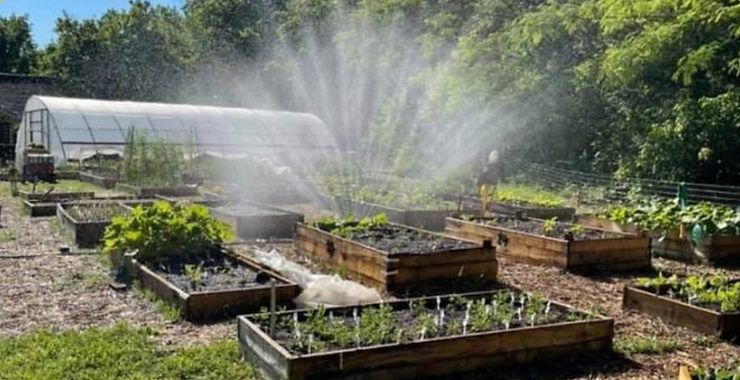
Community-held farms are removed from the volatile and extractive real estate market. The responsibilities and costs of land ownership are shared by the community, freeing the farmers to focus on the all-encompassing work of growing nutritious food for their neighbors and being good stewards of the land. Community-held farms allow farmers to create and maintain regenerative ecosystems, create local jobs, and build stronger, more food-secure communities that have more direct and supportive connections to their local food system.
What started as two CSAs in 1984 is now over 14,000 operations today.
Benefits of Community-Held Farmland
Farmland held by community provides numerous benefits. By removing agricultural land from speculative markets through decommodifying the farm real estate into nonprofit community ownership, farms have enhanced security and stability. These vital operations are protected from the economic pressures of land ownership and remain in community control from one farm business transition to the next, allowing for continuity of food production from one generation to the next. This inherent stability also facilitates capital investment, allowing resources to be directed toward crucial infrastructure enhancements like housing, renewable energy, or other specialized infrastructure without the burden of land debt. Farms may evolve to become even more, as nested local arts, crafts, education, and businesses can become embedded into the farm or region as a result of the thriving and interwoven community that grows from this shared asset.

Community land tenure fosters community flourishing and engagement, creating a deep connection between people and place through increased activity and shared responsibility. This not only facilitates a more meaningful relationship with people and the natural world, but it also strengthens community bonds. Because this model ensures the preservation of farm legacy and culture across generations, a farm’s unique character becomes a point of pride in the community and fosters a shared story, identity, and mission, building a resilient social fabric around a shared resource. Ultimately, community ownership provides perpetual land protection and multigenerational land stewardship, safeguarding valuable agricultural land from development and preserving natural resources and ecological integrity for long-term regional food security for the region.
Shared land tenure weaves stronger bonds between people, place, and local food systems.
How and Why It Works
The success of community-held farmland hinges on several interconnected principles and mechanisms, starting with community ownership of land, typically secured through a land trust, which legally insulates the farm from market volatility and ensures its agricultural future. This can be complemented by innovative funding and engagement models like CSA, where members contribute to the farm based on capacity, creating a flexible financial structure that prioritizes farm needs and fosters shared risk and reward.
Cooperative economics and collective energy are vital, with shared community decision-making, often in the form of an assembled board, building a powerful synergy and shared accountability. A strong farmer-community partnership is crucial, built on a robust, trust-based relationship where the community provides stable support for farmers, while also giving the farmers full decision-making power when it comes to the methods of production and land management. The community landholders may offer their comments on the overall mission of the shared community asset, but ultimately, the farmer has full autonomy over how the land is used. Even so, the model is driven by a long-term vision shared by all, ensuring the land is managed with a primary focus on ecological health, soil fertility, and agricultural viability for future generations.
Community foodshed stewardship is a holistic investment in sustainable, resilient local food systems.
Saving Farmland and Sharing Hope
Community-held farmland initiatives score highly across all ESG (Environmental, Social, Governance) criteria, offering investors a clear pathway to demonstrate commitment to sustainability and responsible investing. Unlike short-term ventures, healthy food systems and resilient communities provide long-term value creation and stability. By diversifying food sources, building local supply chains, and improving community health, these initiatives also contribute significantly to risk mitigation against systemic challenges.
This model preserves farm culture and legacy as a shared point of community pride.
Community foodshed stewardship is more than just growing food; it is a holistic investment in the future. It provides compelling returns across environmental, economic, and social spheres, building a foundation of sustainability, prosperity, and resilience. For investors seeking impactful, long-term opportunities that generate both financial stability and measurable positive change, supporting community-held farm initiatives is a strategic and highly beneficial choice. Join us in cultivating a future where essential agricultural lands are preserved in perpetuity and communities thrive through their involvement in healthy, local food systems.
Ways to Support:
- Make a one-time or monthly tax-deductible donation today!
- Give through your Donor Advised Fund (DAF) to help keep this work moving forward.
- Sign up for our newsletter for project updates and upcoming opportunities to get involved.