The Challenges of Corporate Farm Law and the Benefits of Life Estates
Narrated by Aleeyah Frye
Written by Darby Weaver
Every Commons Is Unique
One of the most essential components of the Farmland Commons model is how it is structured to recognize and uplift the uniqueness of each parcel of land. Like the farms, each Farmland Commons is its own organism, created with a sense of place and the intentions of the community and stewards as a central root from which everything grows. This approach honors the unique identity of each farm without forcing homogenization. Furthermore, it is a practical necessity, as every commons and parcel differs in its ecology, social structure, governance, and local regulations.
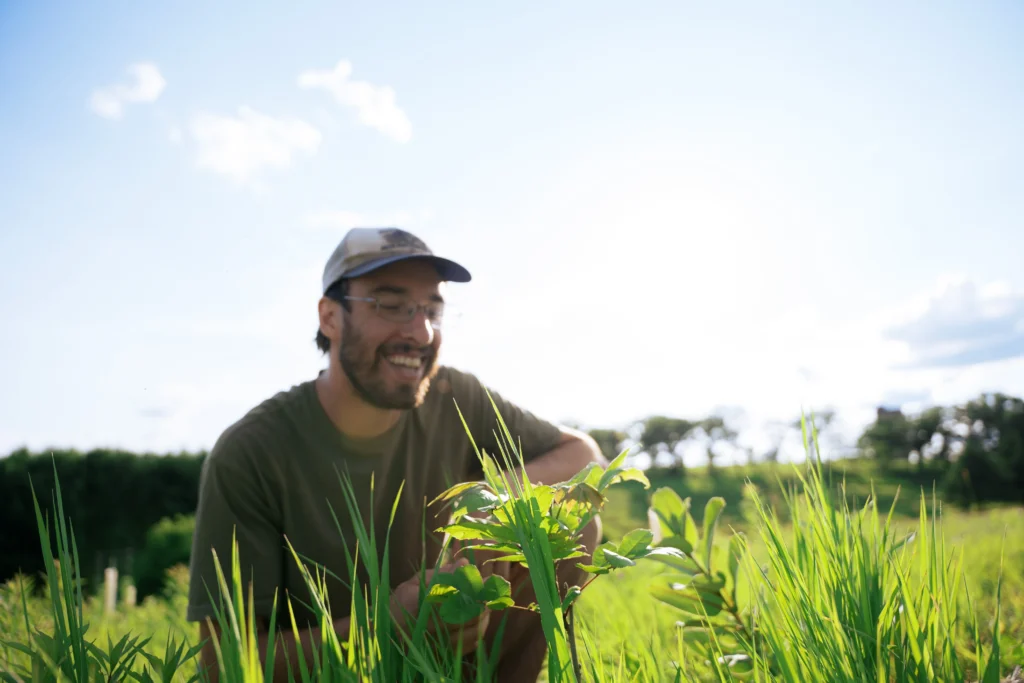
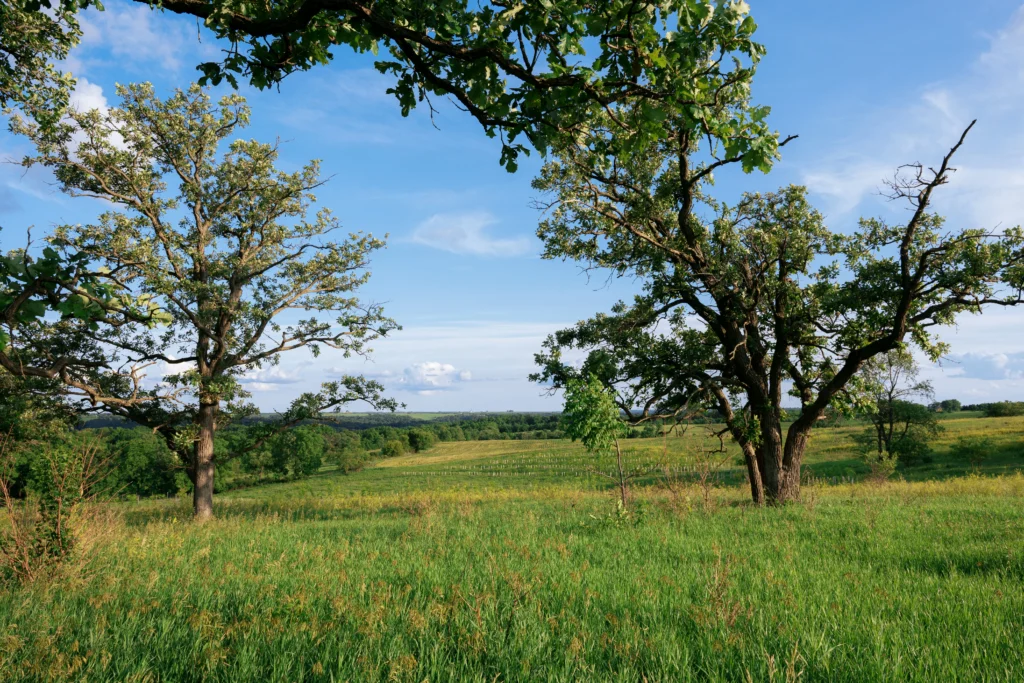
A prime example of this can be found at the newly forming Carya Farmland Commons. Tree breeder Alex Tanke and his partner Emma Kloes aren’t the typical candidates for land preservation. In their late 20s, they are just beginning to dig into the depths of their life’s work on the recently protected acres in Blue Mounds, Wisconsin. On this beautiful piece of land, Alex has been creating a repository of hybrid hickory/pecan, American persimmon, and honey locust trees for nursery stock and tree crop production. Having seen firsthand how vulnerable tree crops are to being lost during land transitions, even with a conservation easement involved, Alex made it a priority to preserve this work in perpetuity through the Farmland Commons model.
The Conservation Activist
The team at The Farmers Land Trust knows all too well that each project has unique challenges. Every state has specific real estate laws to contend with, among other specific systems and guidelines that must be followed for the nonprofit ownership to remain compliant. Fortunately for us, we have an ace on the team whose experience in conservation, real estate law, land use policy, nonprofit development, mediation, and more brings forward possibilities where only roadblocks seemingly appear. Leigh Youngblood, the organization’s real estate manager, has been working in conservation for more than 30 years.
For 27 of those years, Leigh focused specifically on Massachusetts land conservation through the Mount Grace Land Trust. There, she supported and led dozens of landmark real estate transactions, helping to protect around 30,000 acres. As executive director, she grew the small-town operation into one of the country’s most well-regarded, accomplished, and innovative land trusts. Under her leadership, the organization raised millions of dollars and pioneered new conservation methods that have since strengthened and evolved the field nationwide.
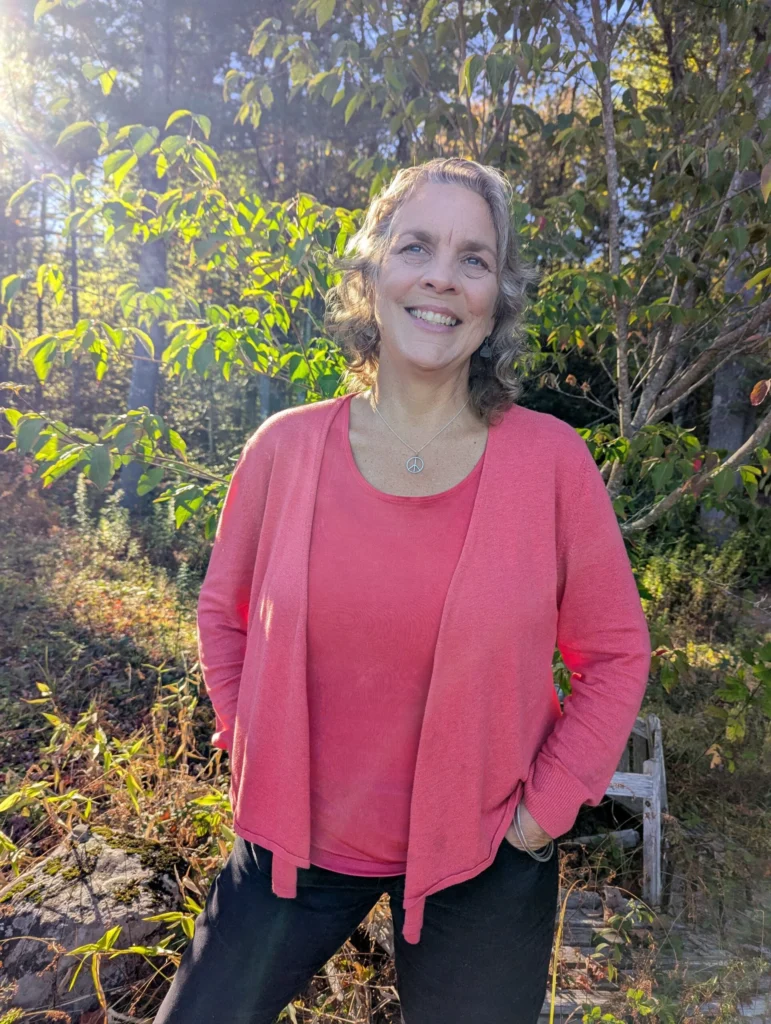
While much of Leigh’s career focused on protecting acres, her life and experience in land conservation made her highly aware of the inequities present in real estate. She found herself particularly responsive to working with farms and prioritizing the needs of oppressed communities. It was through her passion and conviction for racial justice and social equity that she made her way to The Farmers Land Trust, where she brings her expertise and heart to the deep complexities of land transition. Leigh sees this work as a means of helping everyday people navigate the often confusing and gatekept realms of transaction and law. Leigh explains, “The Farmers Land Trust is really about innovation and creativity. In my experience, if you want to be creative with something like real estate, you must understand the law and the legal mechanisms that you have to work with. There are constraints that you must work within, and the more that you understand those constraints, the more creative you can be.”
As Leigh familiarized herself with the Carya Farmland Commons project, she started by getting comfortable with Wisconsin land law. The first roadblock appeared when the team was confronted with Wisconsin’s corporate farming and foreign ownership statutes. Leigh elaborates, “With Alex and Emma at the Carya Farmland Commons in Wisconsin, we have a landowner who is fully committed and doing this awesome work. Alex was ready to protect his work, but the state law there generally prohibits corporations from owning farmland, and The Farmers Land Trust is a nonprofit corporation. Fortunately, there are exceptions. This was a dilemma that we needed to work around, and I worked with attorneys to clearly understand what those exceptions were.”
The next challenge that The Farmers Land Trust team had to navigate involved the lease terms. During the formation process of a typical Farmland Commons, the governing board creates a lease that gives 99-year, long-term security to its leaseholders, as well as framing expectations, agreements, rights, and responsibilities between the farmers, the Farmland Commons board, and the land. There is an open-source lease template on our website for the creation of such a document, and for most places, this is sufficient for the long-term protection of land and stewards alike. This document couldn’t be used in Wisconsin due to Wisconsin Constitution Article I, Section 14, which states that a lease of agricultural land cannot surpass 15 years. This provision was instituted to prevent feudal-like land ownership structures.
An Alternative Tool: The Life Estate
The intentions behind that constitutional provision are for the benefit of the people to prevent feudal-style tenure, not to frustrate community land ownership. Unfortunately, a 15-year ceiling does not mesh with the Farmland Commons’ structure, which depends on long-term security for the farmers who steward community-held land. The team needed to get creative within the allowances available to them, and a new path emerged. Leigh recounts, “Co-executive directors Ian McSweeney and Kristina Villa got creative and had this idea that they would incorporate a life estate. Alex and Emma are both in their late 20s and it is quite uncommon to create a life estate for people that are that young. This is a tool that is primarily used for people who are in a much later part of their life, in their 50s, 60s, and 70s, considering what is going to happen after their lifetime.”
A life estate divides ownership across time rather than across a map. The life tenant holds the right to occupy and use the land for as long as a named person lives while another party holds what is called the remainder interest. The remainder interest is full ownership that takes effect automatically when the life estate ends, with no probate and no further paperwork. The deed is simply the instrument that creates the split; the life estate is the interest in land itself. In the ordinary case, an aging owner keeps her house for life and the remainder passes to a child.
The Carya arrangement inverts almost every element of that picture. The life tenants are in their late 20s rather than their 70s. The remainder goes not to family but to a nonprofit. Leigh explains, “In this case, Alex states that he is conveying his land to The Farmers Land Trust but reserving a life estate, which means that he will basically keep many rights to the land, with limitations, until he dies. Only when Alex dies will the land be fully owned by The Farmers Land Trust.”
A life estate divides ownership across time rather than across a map.
Creatively, the deed carries conditions on how the land may be used in the meantime. Those limitations are what turn a traditional succession tool into an innovative conservation tool. The conditions attached to the deed require that the farm acres be stewarded for tree crop production, and that Alex and Emma use the land in service of that goal. “This is not just Alex giving his land away now; it is giving the land away later, and while he still has the land, he can only do certain things,” Leigh says. “Those certain things can be specified and tailored to the situation, just like a conservation easement can be tailored. The life estate becomes a form of land protection because part of what must happen for the life estate agreement to move forward is that Alex and Emma cannot undermine that future intent that will later be carried out by The Farmers Land Trust.”
The parallel to a conservation easement runs further than the drafting. “Working with this tool in a new way, I have realized that the life estate has some attributes similar to a conservation easement,” Leigh notes. “Both conservation easements and life estates’ remainder interests are shared ownership. It is a very close relationship, and there must be communication.” The resemblance holds in three respects: both split a single property between two parties with distinct interests, both can be tailored to a particular place and purpose, and both bind the current occupant to terms set in advance. They differ in one respect that matters, and it is worth naming plainly. A conservation easement is perpetual and runs with the land, enforceable against every future owner by a holder who does not own the land. A life estate’s conditions bind only the life tenants; when the life estate ends, The Farmers Land Trust holds the land outright, and the commitment to tree crops rests on the organization’s own governance rather than on a restriction any outside party could enforce.
There is something so moving about the idea that the Earth is not simply a victim but is actively engaged in influencing us for the better.
That is precisely why the relationship, and not just the paperwork, is the substance of the arrangement. Alex and Emma will meet with the organization annually, and a farm management plan will be reviewed every three years. From Leigh’s experience, conservation succeeds through committed relationships and continuing dialogue about a particular piece of ground. There are few partnerships more intimate than shared ownership, especially when a shared mission drives it.
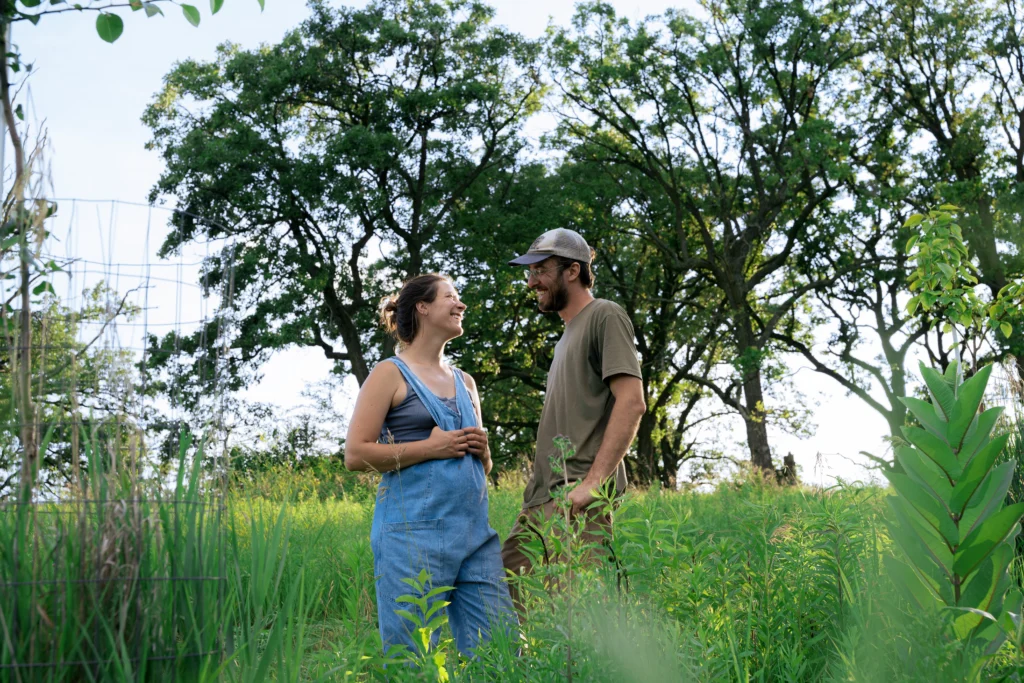
The long arc of time needed to make progress in breeding trees for the goal of harvest-worthy groves is secured for the foreseeable future, and when a new steward takes over the reins, they will have an incredible foundation to build from. Leigh reflects, “I see possibilities and potential all around. Being a part of helping to facilitate the aspirations that people have about connecting to the land is cool and meaningful. There are so many forces in the world that are doing the opposite. If I get bogged down by that, it’s nice to think of the myriad ways that connection and generative action is possible. This kind of work reinforces my personal beliefs that the antidote to the gloom of the bigger world, especially the political world, is community.
The Earth Is Working on Us
When talking about hope found in people and organizations willing to create and hold community, Leigh also expressed a beautiful sentiment about our relationship to the Earth. One of the projects Leigh was involved with during her time leading conservation in Massachusetts was the Tully Initiative. Special state funding was awarded to an initiative within the Tully River Watershed, primarily using conservation easements to protect native biodiversity. Leigh and her team mailed every landowner in the watershed owning 20 acres or more, which ended up being 500 people; from that effort, 104 people completed conservation transactions. When Leigh investigated what areas of the watershed got protected, she saw that only five or six of the newly protected parcels weren’t already connected to protected land. Every tract of land in the watershed was equally eligible and prioritized for protection. Leigh remembers, “What all that told me was that you couldn’t have predicted the resulting pattern of land protection, other than people who next door to already protected land love the land more. The land influences people.”
That is precisely why the relationship, and not just the paperwork, is the substance of the arrangement.
With so much seemingly at stake in our living world today and so much vulnerability in our habitats and regenerative systems, it can feel daunting to hold mental and emotional space for all of the loss and degradation. It is easy to think of the Earth as an eternal victim, slowly being eaten away by our actions and destroyed by our waste. And in the heart of that grieving exists this other possibility. There is something so moving about the idea that the Earth is not simply a victim but is actively engaged in influencing us for the better. Leigh affirms, “I love the way that the Earth influences people. It influences us as much or more than people influence the Earth. The Earth is working on us.”
Ways to Support:
- Make a one-time or monthly tax-deductible donation today!
- Invite friends to join you by matching your donation.
- Give through your Donor Advised Fund (DAF) to help support The Farmers Land Trust.
- Reach out to us today to learn more about the multiple opportunities to engage with the The Farmers Land Trust.
- Sign up for our newsletter for project updates and upcoming opportunities to get involved.