
Who Will Own Our Future? How the Farmland Commons Breaks the Grip of Big Energy and Big Agriculture
Narrated by Aleeyah Frye
Written by Darby Weaver
A Land Grab Economy
It’s a small world, as they say, and it turns out it is getting smaller. Not in the sense that our physical reality is actually shrinking, but that the world’s natural landscapes and resources are being located, exploited, and owned by a smaller group of people, resulting in the continual consolidation of power and wealth. According to the American Farmland Trust, we are losing 2,000 acres of farmland in the United States a day. And while much of that land loss can be attributed to the creation of subdivisions, highways, and other forms of commercial development, there’s also a growing trend of corporate interests from all over the world buying up and hoarding available land. The bottom line is that ownership of farmland, energy infrastructure, and natural resources is becoming increasingly concentrated in fewer corporate hands.
These corporate entities, the power players in the realms of Big Agriculture and Big Energy, are using their massive infrastructure and land holdings to leverage the economic system for their benefit. Their continuous funneling of precious global resources fuels their endeavors and generates wealth, granting them unfettered policy influence, heavy media reach, elite legal defense, and partnerships with other wealth-driven sector giants whose alliances exponentially expand their reach.
These industry leaders maneuver through regulatory blocks and avoid punishment and consequences because they are often involved in building the very framework that is meant to regulate them. Award winning print and audio journalist Amy Westervelt adds, “Now these two industries most responsible for the climate crisis have teamed up on a false solution to it—carbon capture—that adds new health risks and does nothing to solve the problem.”
We are losing 2,000 acres of farmland in the United States a day.
Carbon Trading and Extraction by Invisible Hands
Amy Westervelt is an award-winning investigative journalist, author, and podcast producer whose work has helped define modern climate accountability reporting. Over a two-decade career, she has reported for The Guardian, NPR, The Atlantic, The Wall Street Journal, and other leading outlets; has founded the acclaimed podcast company Critical Frequency; and earned numerous honors, including a Rachel Carson Award, an Edward R. Murrow Award, multiple Covering Climate Now Awards, two Peabody nominations, and recognition as Covering Climate Now’s 2023 Journalist of the Year. Through print and audio storytelling, her work continues to expose the systems driving the climate crisis in hopes of expanding public understanding of their impacts.
One of her ongoing projects, founded in 2017, Drilled is a podcast that explores the people, industries, and power structures driving the climate crisis. Often described as “true crime for climate change,” the series uncovers decades of fossil fuel deception and the forces that have obstructed meaningful climate action, evolving from a single narrative podcast into an ongoing investigative reporting project. Recently debuted season 15 of Drilled: “Carbon Cowboys” explores the rise of carbon capture and so-called “clean energy” projects that promise climate solutions while expanding industrial agriculture and corporate influence. Following ethanol magnate Bruce Rastetter’s growing ambitions from the American Midwest to Brazil, the series examines how carbon markets, sustainable aviation fuel, and carbon capture have become powerful economic narratives, raising critical questions about who benefits, who bears the costs, and whether these projects meaningfully address the climate crisis at all.
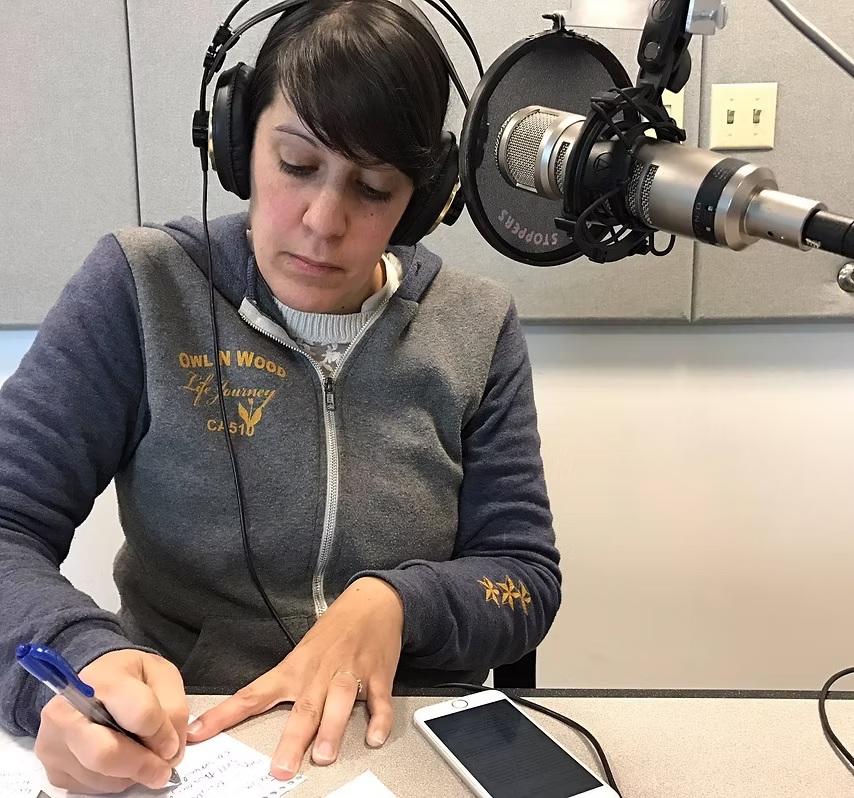
I was lucky enough to connect with Amy recently about current events. She sees the massive amount of power and influence wielded by the major players in Big Energy and Big Ag as one of society’s toughest challenges today. She believes that the union of the two forces within the industrial agriculture complex has unleashed a toxic momentum destined to dismantle ecologies and communities the world over. Amy elaborates, “Big Ag and Big Energy are often lobbying for the same things, whether it’s blocking emissions regulations or pushing for carbon capture incentives. They use similar tactics to obstruct climate policy but with different frames. For the energy industry, pinning emissions on individuals is a key strategy, while Big Ag hates the idea of people taking individual responsibility for their emissions (it is much easier to change one’s diet than to change one’s energy sources). Big Ag in some ways is even more powerful than Big Energy as they have pretty successfully shut down any conversation about reining in their emissions.”
These combined efforts of lobbying and manipulating public perceptions have significant consequences for our world. The fallout from these corporate operations includes inflating land costs, the loss of diversified farmland and natural habitat, and the expansion of harmful industrial monocultures and CAFO farming. Compounding this, the rise of carbon markets introduces a troubling new tread: treating land as a financial asset rather than a living community. All of these impacts pose threats to our future world. Amy explains, “I see loss of biodiversity, erosion of Indigenous sovereignty, scarcity of drinking water, erosion of soil, increased air pollution, massive health impacts ranging from respiratory illnesses to cancer, and ironically less food and more poverty despite all the claims to the contrary. No one knows and sees better than farmers the impact of climate change on crops, and industrial agriculture only exacerbates the problem.”
… the two forces within the industrial agriculture complex has unleashed a toxic momentum destined to dismantle ecologies and communities the world over.
When it comes down to it, the impacts are many and far-reaching, but as is most often the case, they are all related. The truth is, even concepts that are pitched to citizens as progress toward a better world can be extractive when the ownership and profits are centralized and controlled by corporate influence. Solar power and carbon markets are presented as climate solutions, while simultaneously being destructive vehicles for corporate interests. The fossil fuel problem may be replaced with renewables one day, but the problems at hand will continue if we do not directly address the consolidated ownership of resources and land. Our true hope in tackling these giant, ever-maneuvering institutions won’t necessarily be accomplished by voting with our forks alone. To make real change possible for the betterment of land and people, we need to completely reframe our currently held belief system about ownership.
Our Green Future Hinges on Ownership
While most climate crisis solutions hinge on changing practices on the micro to macro scale from extractive to regenerative, not much mainstream attention is being brought to the inequitable state of land ownership. Without addressing the land ownership trends that are dismantling our regional food systems, benevolent practices will forever remain vulnerable to market forces and acquisition. When I asked Amy what the most dangerous part of Big Energy and Big Ag owning more land is, she immediately named the harm to the environment and oppressed people.
Amy explains, “We went the way of land speculation and have never really course corrected for that. So, my concerns are both environmental—the impacts of industrial agriculture on water, soil and air are well documented as is its role in climate change—and justice-oriented: who has access to land and who doesn’t have a lot to do with who has power and agency, not just in the U.S. but globally.”
“We went the way of land speculation and have never really course corrected for that.”
When corporate interests rule decision-making, any local assets not essential for profit creation are endangered. The regenerative systems of small-scale farmers, the resilience of communities with established pathways of mutual aid, and the forever-dwindling ecological scaffolding of our burning natural world are all essential for an equitable future, yet under modern capitalism, they are dismissed as valueless, or even as burdens on economic progress. In reality, these are the very entities holding the solutions we have been looking to leadership for, and their preservation and support are paramount for the world we seek to create.
At The Farmers Land Trust, we understand that the unjust power dynamics of our country are directly tied to our current and historically racist and problematic land theft, commodification, and ownership model. We know that people are working the land and building communities today who have the skill sets, integrity, and heart enough to revolutionize our world. We feel deeply the urgent need to remove ecologically invaluable landscapes from the speculative market and place them securely into the Farmland Commons for multi-generational care. We see the huge latent potential of community land ownership and how that reframing of power will create a ripple effect of benefits strong enough to touch the whole world.
Power to the People Through the Farmland Commons
Supporting the current work of small-scale farmers and makers roots our spending back into our community. It secures essential food sources and products needed and limits our negative impact on distant communities and ecologies. Small-scale regenerative farmers are facing climate change in real time and are evolving their systems strategically to bolster their operations against unpredictable weather patterns with stunning resilience. Amy notes, “I tend to think of them as climate-change-adapted farmers, preserving biodiversity, building back the soil, improving watersheds, which will be increasingly necessary as droughts intensify. All of these will be critical for growing food and other agricultural products in the future.”
To support these driven individuals facing increasingly catastrophic weather trends, intensifying inflation impacting both the cost of living and the cost of doing business, low margins on the sale of their products, and growing market competition from the industrial agriculture complex disguised through marketing as natural farming, we need to place them in a system where they wield true power. Through the Farmland Commons model, the farmer is given secure tenure to farm through a 99-year lease and full autonomy over the daily activities of the community-held farmland. They have a seat on the greater decision-making board, which provides the community with fair, democratic governance. The Farmland Commons provides permanent affordability to the farmer, allowing for long-term, multi-generational ecological stewardship. Simultaneously, the land is removed from the speculative market and managed by a community of people who truly understand the value of the asset beyond its monetary worth.
The Farmland Commons model isn’t a concept; it is a powerful tool of transformation that is already in use. Today there are seven active projects in communities across the country, each created with a sense of place and a deep connection to the people that call their region home. The model is designed to protect vulnerable farms of all shapes and sizes with varying missions, methodologies, and levels of community involvement. This powerful reframing of ownership was designed so it can be replicated and refined for any regenerative land, anywhere in the United States.
San Juan Islands Farmland Commons, Washington State
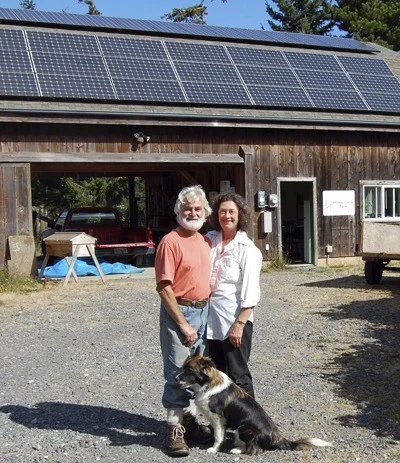
The Farmers Land Trust partnered with elder biodynamic authors and farmers Henning Sehmsdorf and Elizabeth Simpson to envision the San Juan Islands Farmland Commons at S&S Homestead Farm, preserving its legacy and providing secure, affordable land access for the next generation of farm stewards. Since 1970, the 22-acre Lopez Island farm has operated as a biodynamic, self-sustaining organism, integrating crops, livestock, compost, and ecological stewardship into a resilient whole. What Henning and Elizabeth purchased for just $33,793 and nurtured over a lifetime is now valued well above $1 million, placing it beyond the reach of most farmers.
Once surrounded by working farms and forests, S&S Homestead is now bordered by luxury waterfront estates worth millions of dollars, underscoring the growing pressure on farmland and the urgent need for community ownership.
Regeneration Arizona Farmland Commons, Southcentral Arizona
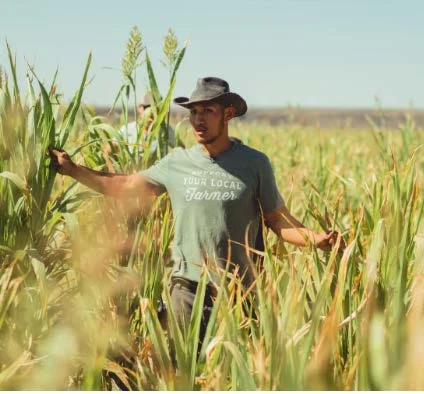
The Regeneration Arizona Farmland Commons was created to bring farmland into community ownership, where it can be stewarded in service of both people and ecology.
The effort began with DRY (Development of Regenerative Yields Cooperative), founded by Arizona farmer and ecological researcher Yadi Wang and a group of partners committed to a bold vision for regenerative agriculture. Together with The Farmers Land Trust, Mollen Foundation, and Think Regeneration, they are establishing a 501(c)(25) land-holding entity dedicated to protecting farmland, advancing ecological farming, and supporting future generations.
More than preserving acres, the Regeneration Arizona Farmland Commons is cultivating a resilient food system where land, water, farmers, and communities can thrive together.
Carya Farmland Commons, Southwestern Wisconsin
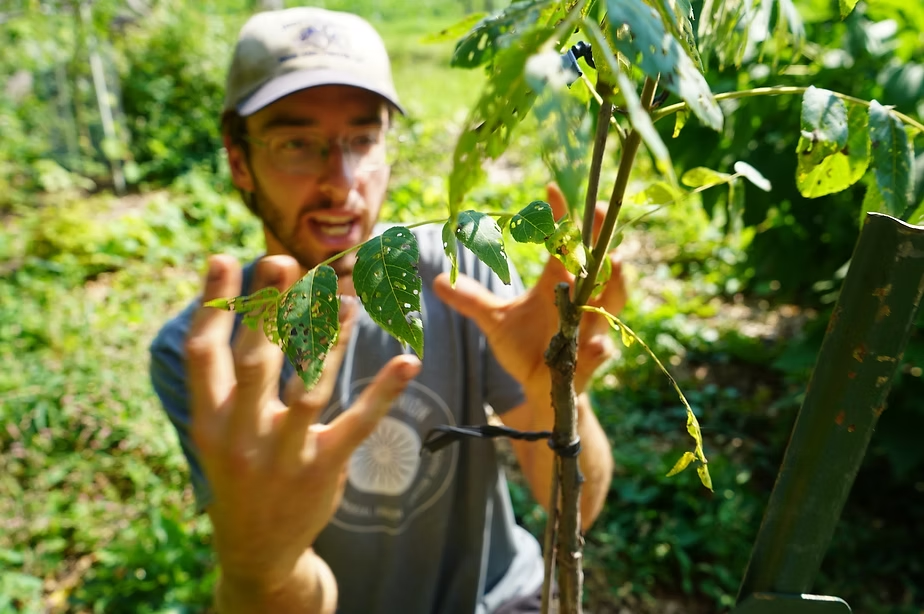
Alex Tanke is a tree crop breeder and nurseryman dedicated to making hybrid hickories a staple crop across the Midwest. His work spans breeding, genetics, propagation, processing, and grove management, tackling the barriers that have long limited hickory’s potential.
Through his breeding program, Alex has developed the region’s most significant hybrid hickory collection and is creating the next generation of improved trees, a land legacy that will be supported and protected by the Carya Farmland Commons for generations to come as the trees grow to maturity. In collaboration with growers and processors across the country, his work is helping bring hickory oil, milk, and kernels to market while laying the foundation for a resilient perennial food system.
Earthen Heart Farmland Commons, Southwestern Michigan
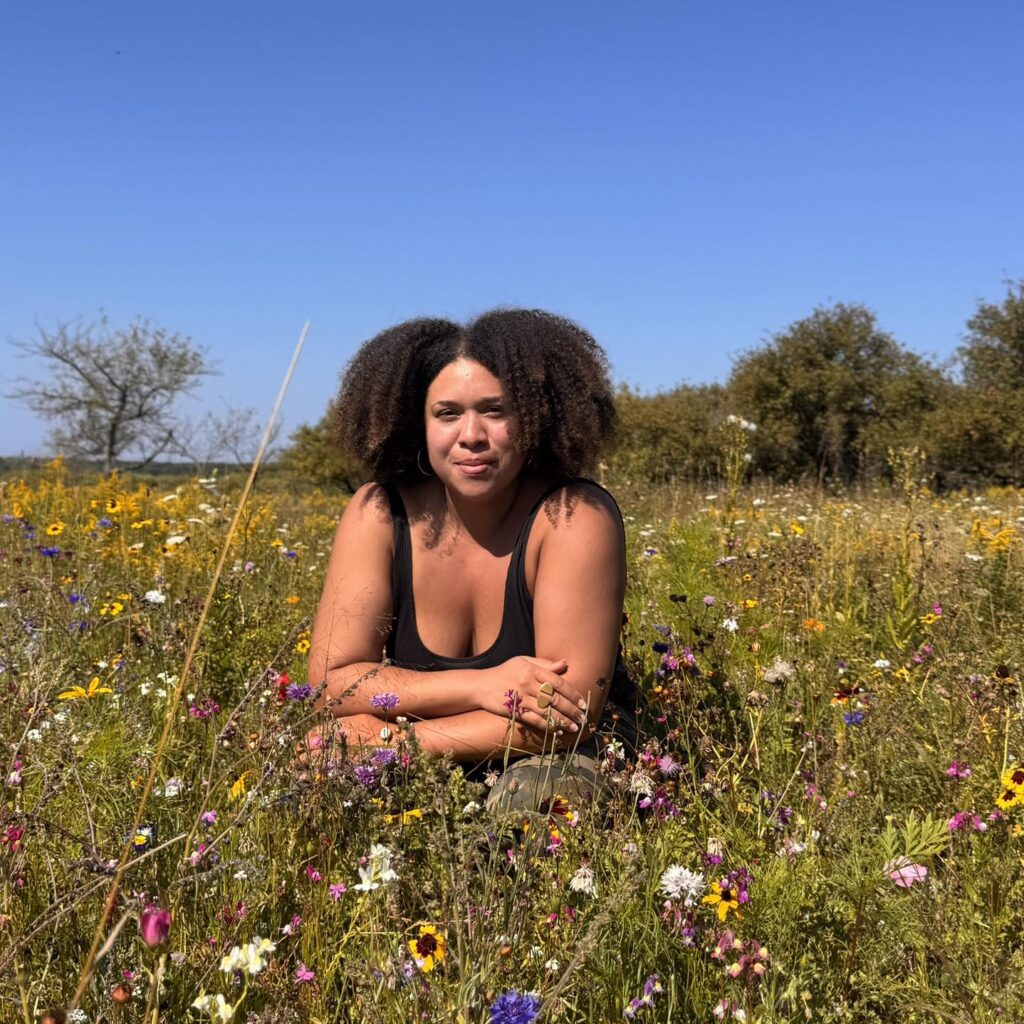
Visionary creator Julian Lauzzana gifted his Bangor, Michigan farm into the Farmland Commons and established a farm reserve endowment to help secure its future. After a career spanning the culinary arts, entertainment, organizational consulting, and education, Lauzzana now dedicates his work to community homesteading and the Earthen Heart initiative, creating practical, replicable models for healthy, resilient rural communities.
Today, the land is held by The Farmers Land Trust, while the Earthen Heart Farmland Commons is formed and leased through a 99-year agreement to Alita Kelly, founder of Jade Rabbit and a leader of the West Michigan Young Farmers Chapter. The lease provides long-term, debt-free access to land, giving Alita the security to build her livelihood, deepen her relationship with the land, and invest in stewardship on the property, benefiting generations to come.
East Tennessee Farmland Commons, Southeastern Tennessee
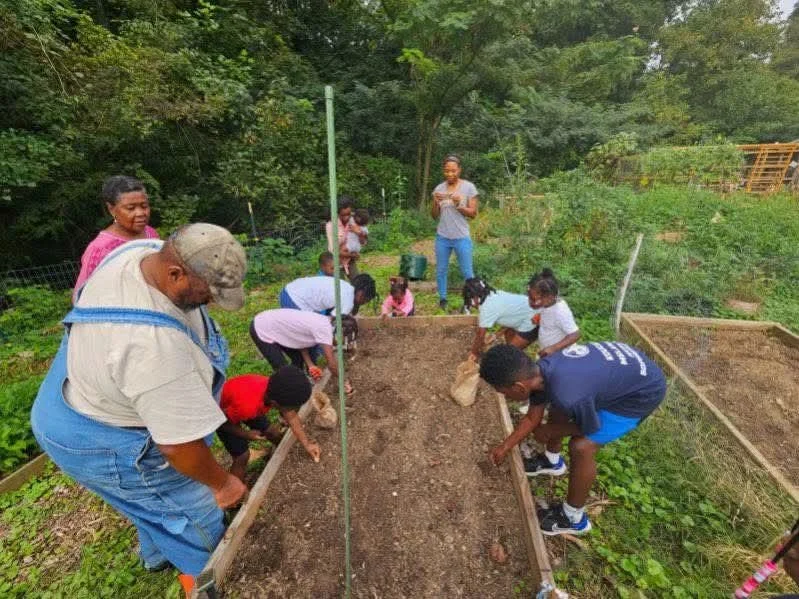
The East Tennessee Community, Housing & Farmland Commons is a unified effort of five organizations (Rooted East, Battlefield Farm, Knox County Community Gardens and Growers Alliance, Shora Foundation, and The Institute of Cooperative Learning). They are building a Black-led food justice collective in response to generations of systemic land dispossession and inequitable access to healthy food. While many aging white landowners are considering how to transition farmland, Black communities across the country continue to face significant barriers to land access, ownership, and food sovereignty.
Decades of urban renewal projects dismantled East Knoxville’s thriving Black neighborhoods, replacing local businesses, farms, and gardens with food apartheid, where fresh, nutritious food is scarce. Today, many residents must travel hours by public transportation to reach a grocery store, a reality shaped by longstanding policies that have concentrated unhealthy food options while limiting access to essential resources. The East Tennessee Farmland Commons is working to reverse this legacy by rebuilding community food systems and creating pathways toward land access and equity in the food system.
Blue Rock Farmland Commons, Southeastern Ohio
For more than 30 years, Annie and Jay Warmke have transformed land into Blue Rock Station, a living classroom for sustainability, resilience, and joy. They planted thousands of trees, welcomed tens of thousands of visitors, built an Earthship, and created a place where people could learn not only how to care for the Earth, but how to belong within it.
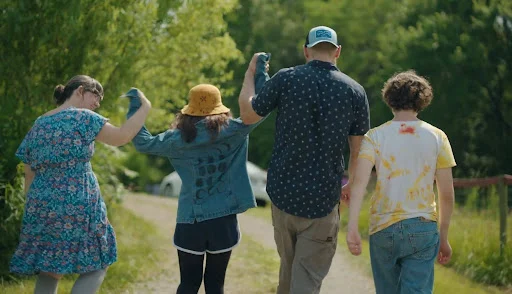
Now, by transferring Blue Rock Station into the Blue Rock Farmland Commons through a bargain sale to The Farmers Land Trust, they are ensuring this remarkable place remains protected, accessible, and productive for generations. Their decision reflects a deep commitment to the future, preserving both the land and its legacy as a place of learning, stewardship, and possibility. Operation of the farm is currently being transitioned to the Ricks family, a young farming family who encountered countless barriers when trying to access land.
Chesapeake Farmland Commons, Central Maryland
Founder and visionary Atiya Wells is building the Chesapeake Farmland Commons in Northeast Baltimore to keep farmland in community hands. A pediatric nurse, educator, and founder of Backyard Basecamp, Atiya is reconnecting communities of color to land, nature, and opportunity.
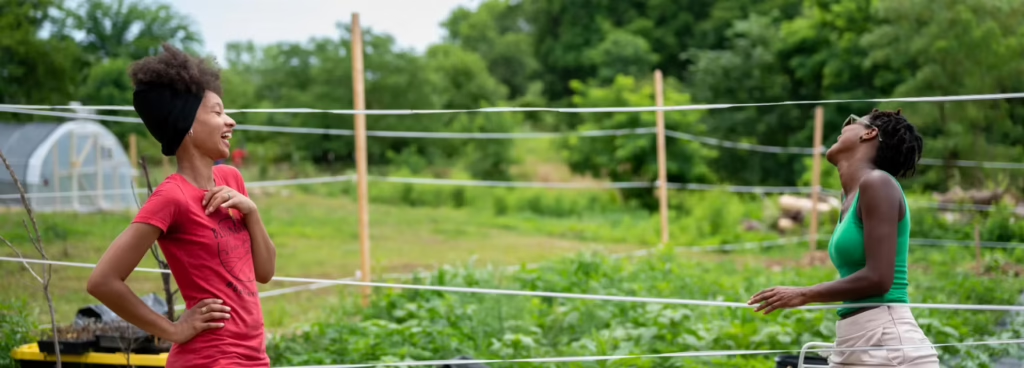
Rooted in BLISS Meadows, a 10-acre urban reclamation project, this work weaves together environmental education, community stewardship, and food sovereignty into a bold vision for Baltimore’s future. In addition, Backyard Basecamp has received official approval to launch their Outdoor Nature Preschool at BLISS Meadows in Maryland this fall. After four years of advocacy, planning, and navigating a rigorous approval process, they are bringing nature-based education to their vibrant farm ecosystem, where children will learn through exploration, discovery, and a direct connection with the land.
Supporting the current work of small-scale farmers and makers roots our spending back into our community.
Beyond Agriculture
Each Farmland Commons project can be described as a preserved or reconnected agrarian landscape, but the reframing of ownership allows it to become so much more. The land becomes a hub of sorts where intergenerational wisdom is held and passed down. It is a place where living systems are allowed to mature and evolve, keeping the best parts of their past incarnations fully embedded in their future structures. It gives community members say and sway in how their natural resources are managed and shared through a fully democratic system. Those who have magic to offer with the land and people can do so without the typical financial and societal barriers that repress their gifts. In the Farmland Commons model, everyone involved has something to offer that can be honored in the system.
It can be hard to know how to help the imperiled world when everything seems so out of hand. We wake up in the morning hoping to do right by the Earth and each other and are bombarded by mixed messages about what fuel sources we should be using and if recycling is real or not. Amy reminded me that there are so many different ways that people make an impact, and there’s truly no such thing as the “average consumer.” Amy explains, “Sometimes the most impactful thing a person can do has absolutely nothing to do with consumption; it could be talking to folks in their community, running for local office, community organizing, or running a regenerative farm that provides a model for others—or a whole bunch of other things. Everyone has their particular strengths, skills, interests, and communities, and there’s a climate action to suit them all.”
Regenerative agricultural practices are foundational blocks in the creation of communities that can not only survive but thrive. From that initial cultural root that goes directly into native soil, communities can build the systems that support an equitable living for their people and the well-being of their ecosystems. We have come to a chapter in human history where we are being asked to examine our social frameworks and admit that lasting ecological health requires the creation of institutions that distribute ownership, responsibility, and decision-making in ways that mirror living systems. Even the apex predator with seemingly limitless power remains beholden to the balance of the system operating in harmony to which it belongs.
Ways to Support:
- Make a one-time or monthly tax-deductible donation today!
- Invite friends to join you by matching your donation.
- Give through your Donor Advised Fund (DAF) to help support The Farmers Land Trust.
- Reach out to us today to learn more about the multiple opportunities to engage with the The Farmers Land Trust.
- Sign up for our newsletter for project updates and upcoming opportunities to get involved.